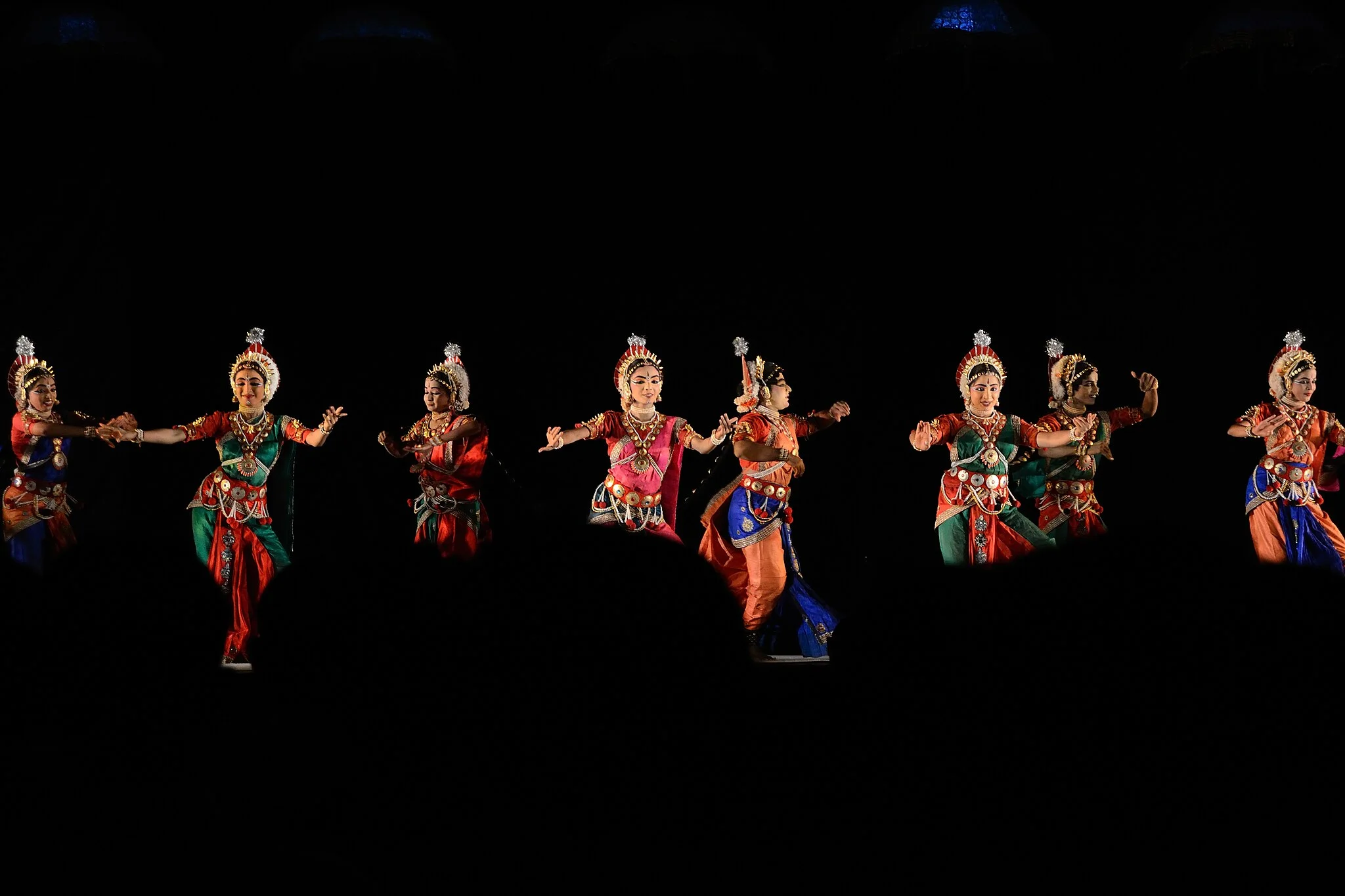
Aerial Mandalas! Among the most mesmerizing yet least understood aspects of classical Indian dance are the Aerial Mandalas (Ākāśa Mandalas). These dynamic patterns show intention, control, and storytelling through air.
“Gesture is everything in drama. Without movement, there is no rasa.”
In the Natyashastra, a mandala (मण्डल) is a “circular pattern or combination”. It is created through the sequencing of specific Charis (carīs are basic locomotor dance movements).
There are bhūmi (earth-based) mandalas and ākāśa (aerial) mandalas.
The aerial mandalas are also known as ākāśa mandalas. To make these, dancers need to move with the right cārīs like the Bhramarī and Sūcī. These moves bring both elegance and strength together. Check out the 32 Charis here.
These patterns are made to wow people with the way they look but also to help dancers show fight stances.
They can be used in plays. Each mandala requires skill from old Indian dance ways. Let us look more into these special art forms and see what makes them stand out.
Atikrānta, Vicitra, Lalita-Sañcara, Sūcīviddha, Daṇḍapāda, and Vihṛta-Ālātaka. These are the types (of Mandalas or movement formations).
1. Atikrānta (अतिक्रान्त) (The Overstep)
This is expansive and athletic. It includes multiple shifts in direction and mood. Use it to depict characters entering boldly, advancing into battle, or facing dilemmas.
Cārī Sequence:
Janitā cārī with the right foot
Śakaṭāsyā cārī with udvāhita (lifted) chest
Alātā cārī with the left foot
Pārśvakrāntā cārī with the right
Sūcī cārī with the left
Apakrāntā cārī with the right
Sūcī cārī again with the left
Bhramarī cārī (with a trika turn)
Udvṛtta cārī with the right foot
Alātā → Bhramarī cārī (left)
Alātā again
Daṇḍapāda cārī (final beat)
Tip:
Feel the “overstepping” nature. Use elevated knees, forceful hops, and fast turns to push through space. The shifts should feel like wind breaking through clouds.
Vāmabandha, Salalita, Krānta, and Ākāśagāmi. O best of twice-born (Brāhmaṇas), know these as the terrestrial (Bhūmigāni) mandalas (movement formations on the ground).
8. Vāmaviddha (वामविद्ध) (Struck on the Left)
This is diagonally inclined. The name suggests asymmetry or an unbalanced strike.
Cārī Sequence:
Sūcī (right)
Apakrāntā (left)
Daṇḍapāda (right)
Sūcī (left)
Bhramarī → Pārśvakrāntā (right)
Ākṣiptā (left)
Daṇḍapāda → Ūrūdvṛtta (right)
Sūcī → Bhramarī → Alātā (left)
Pārśvakrāntā (right)
Atikrāntā (left)
Tip:
Keep your shoulders tilted, never squared. Dance like a bow being drawn sideways.
9. Lalita (ललिता) (The Elegant)
As the name suggests, this mandala is meant to be charming and unhurried.
Cārī Sequence:
Sūcī (right)
Apakrāntā (left)
Pārśvakrāntā → Bhujaṅgatrasitā (right)
Atikrāntā → Ūrūdvṛtta (left)
Alātā (left)
Pārśvakrāntā (right)
Atikrāntā (left)
Tip:
This is a gliding mandala. Lower your gaze, soften your hands, and float.
10. Krānta (क्रान्त) (The Gait)
This is the simplest and the most natural-looking of the aerial mandalas. Perfect for entrances and exits.
Cārī Sequence:
Sūcī (right)
Apakrāntā (left)
Pārśvakrāntā (right)
Pārśvakrāntā (left) (repeat around in all directions)
Sūcī (left)
Apakrāntā (right)
Tip:
This is walking, but stylized. Keep even tempo. Let your walk tell a story. Who are you, where are you going?
Final Thoughts
The ten aerial mandalas from the Natyashastra show how dance can be both athletic and creative. Each mandala highlights the long history of Indian classical dance.
These styles let people share feelings and stories by floating in the air. These lovely moves build the dancer’s skill. And they also keep the crowd interested and pull them into a special world of expression.
Enjoy this art form and look closely into the many details of these aerial mandalas. If you want to raise your dance to the next level, you can try classes that teach these amazing styles!
About Natya-Shastra.in
At Natya-Shastra.in, our mission is to serve as a gateway to the illustrious world of the Natyashastra. We offer insights, resources, and a platform to delve deeper into the nuances of Indian performing arts.
Also, we aim to bring forth the richness of this ancient text. We try to shed light on the profound wisdom it holds and its everlasting influence on various artistic traditions.


Offer Your Expertise