Estimated reading time: 7 minutes
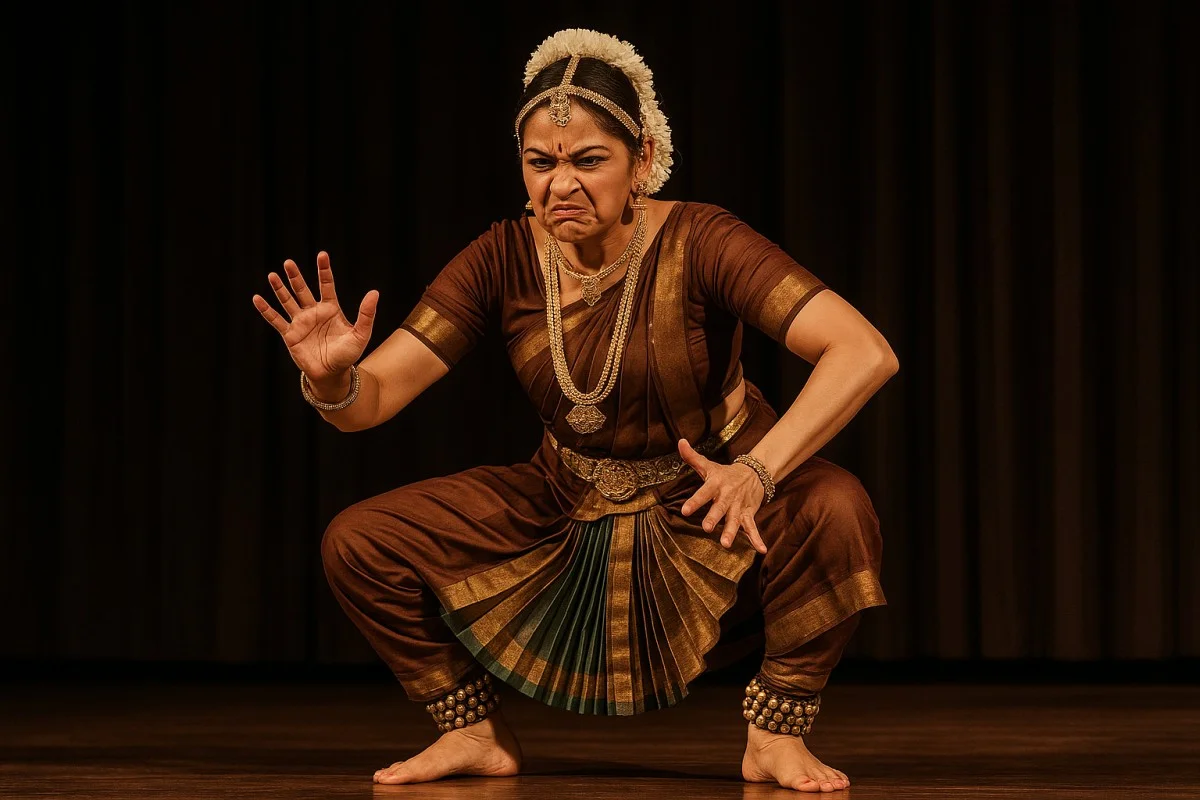
Bibhatsa Gati Or Odious Sentiment Gait! In classical Indian dance and theatre, no emotion is spared. Bibhatsa Rasa, the sentiment of disgust, gets its own language of movement. Its own beat. Its own walk.
Most dancers avoid it. Not because it’s ugly. But because it’s hard. It demands control. Precision. And above all, fearless expression.
Let’s see how the Natyashastra and Abhinayadarpaṇa detail the gait for this sentiment. Practice this gait using this step-by-step guide of Odious Sentiment Gait.
You will also get access to references, examples, and breakdowns that you can use in class or choreography.

What is Gati in Natyashastra?
Gati means gait. The way a character walks. It’s the meaning we convey in motion. Every rasa (emotional flavor) has a gait that supports its essence. Heroic has a bold stride. Love has grace. Disgust? It walks differently.
Read the full article of Gati to get full understanding.
Where does Bibhatsa fit in?
Disgust, or Bibhatsa, is the most physical of the rasas. It hits the gut. So its gait must show that visceral reaction. It should have revulsion, nausea, and hesitation too.
Also read Royal Gait, Erotic Sentiment Gait and Terrible Gait.
We are here, follow us.

गतिं तत्र प्रयुञ्जीत बीभत्साभिनयं प्रति ।
क्वचिदासन्नपतितैः विकृष्टपतितैः क्वचित् ॥ ५५॥
gatiṃ tatra prayuñjīta bībhatsābhinayaṃ prati |
kvacidāsannapatitaiḥ vikṛṣṭapatitaiḥ kvacit || 55||
Meaning:
For the portrayal of Bībhatsa Abhinaya (disgusting or odious emotion), the gait (gati) employed should include steps that seem as if one is about to fall (āsanna-patitaiḥ) at times, and at others, dragged and collapsing (vikṛṣṭa-patitaiḥ).

Get featured on this blog?
Share your videos and images of you performing classical dance!
We’d love to showcase your talent and passion for classical dance with the world. (with proper credits)
Let’s Get Into The Scene: Cremation Grounds and Battlefields
The context of Bibhatsa Gati isn’t random.
- Think: scorched earth, blood-stained soil, burning corpses. For someone who understands Indian culture, think of Maa Kali.
- Locations: post-war fields, mass death, decaying matter, demons dying.
- Emotion: horror, aversion, the need to walk through filth without becoming it.
Your body must react to the space it’s in. And you need to do it without fleeing from it. That tension creates drama.

एडकाक्रीडितैः पादैरुपर्युपरि पातितैः ।
तेषामेवानुगैर्हस्तैर्बीभत्से गतिरिष्यते ॥ ५६॥
eḍakākrīḍitaiḥ pādairuparyupari pātitaiḥ |
teṣāmevānugairhastairbībhatse gatiriṣyate || 56||
Meaning:
In Bibhatsa (the odious sentiment), the gait should be done using the ‘eḍakākṛīḍita’ type of foot movements where the feet fall one upon the other repeatedly along with hand movements that follow in harmony with those steps.
Practice This Bibhatsa Gait: Step-by-Step
“The feet in the Eḍakākrīḍitā Chari falling in quick succession, sometimes close, sometimes wide apart… with the hands following.”
Step 1: Start with Eḍakākrīḍitā Cārī
What is Eḍakākrīḍitā?
- Eḍaka = wild goat
- Krīḍita = play/movement
- So, this is the wild goat-like playful gait
But don’t take “playful” literally here. In Bibhatsa, this chari becomes grotesque. Ugly in a way that is not natural.
How to do it:
- The dancer alternates foot placement. One foot crosses in front of the other.
- Knees should be bent, like a cautious animal.
- Movement is unpredictable. Quick steps.
- Sometimes the feet are placed close together, almost stumbling.
- Sometimes far apart, as if avoiding something vile on the ground.
Step 2: Hand Movement Follows the Feet
- Hands don’t lead. They stay spread out but behind the body.
- They trail the feet, showing the body’s discomfort.
- Fingers can be slightly flexed, as if the dancer doesn’t want to touch anything.
- Wrists should flick or shake, subtly, like a reaction to a foul smell.
Step 3: Spine and Torso
- Slight front tilt. But it should not slouch, but leaning, as if walking through danger or disgust. (Think of walking next to a stinking garbage bin)
- Shoulder movement should be minimal.
- Let the spine guide the turn of the body.
Explore Samyuta and Asamyuta Hastas
The Practical Application in Dance and Drama
Here’s how to insert the Bibhatsa Gati or Odious Sentiment Gait in performance:
In Bharatanatyam
- Use it in varṇam storytelling when the heroine walks past a battlefield or sees a grotesque sight.
- Combine it with vyabhicāribhāvas like jugupsā (disgust), glāni (lethargy), and moha (delusion).
In Kutiyattam
- During a nirvahanam, when a character recollects trauma or death, this gait can be part of the physical flashback.
And In Contemporary Choreographies
- Use this gait to depict environmental destruction, war, or social atrocities.
- Keep the authentic structure, but adapt the expression to context.
References
- Natyashastra: Bharata’s description of gaits per rasa.
- Nandikeshvara’s Abhinayadarpana: Describes caris (charis) and their usage in dance.
- Wisdomlib: Edakakridita
Frequently Asked Questions
It’s the walk of disgust. A deliberate, disturbed movement that shows revulsion and unease.
Through uneven footwork (carī), cautious hands, and facial expressions that avoid, reject, or recoil.
In scenes of war, death, or filth. Especially in dance forms like Bharatanatyam, Kutiyattam (traditional Sanskrit theatre), and Kathakali performances.
Irregular steps. Quick shifts. Twisted expressions. A rhythm that disturbs instead of delights.
Because even disgust is part of rasa. And an artist knows how to dance every truth, even the ugly ones.
Share the article
Final Thoughts
To sum up, learn Bibhatsa Gati if you study or practice classical Indian dance. This type of gait helps to add more meaning to the story in a dance.
When you understand the small details of Bibhatsa, you can make your dance or study much better. People who know about Bibhatsa in Natyashastra can truly enjoy and explain this special form more clearly.
As you learn more about this, think about how to use it in your own work or lessons. It will help you see movement and show feelings in new ways.
Cues to Remember
| Cue | What to Do |
|---|---|
| Footsteps | Quick, uncertain, irregular spacing |
| Arms | Passive, trailing, echo movement of feet |
| Head | Slight tilt, avoid eye contact with floor |
| Expression | Unease, revulsion, inner resistance |
| Rhythm | Not smooth. Jerky but controlled |
About Natya-Shastra.in
At Natya-Shastra.in, our mission is to serve as a gateway to the illustrious world of the NāṭyaŚāstra. We offer insights, resources, and a platform to delve deeper into the nuances of Indian performing arts.
Also, we aim to bring forth the richness of this ancient text. We try to shed light on the profound wisdom it holds and its everlasting influence on various artistic traditions.
We are here, follow us.
Disclaimer:
Affiliate Links: Some links earn us a commission (at no cost to you). We only recommend helpful products.
NatyaShastra Glossary: Head over to the Natyashastra Glossary page to know the meaning behind Sanskrit terms used in the articles.
Images & Videos: Representational only, not exact depictions.
Knowledge Source & References: Inspired by ancient Natyashastra scriptures, open to interpretation.
Offer Your Expertise