Estimated reading time: 8 minutes
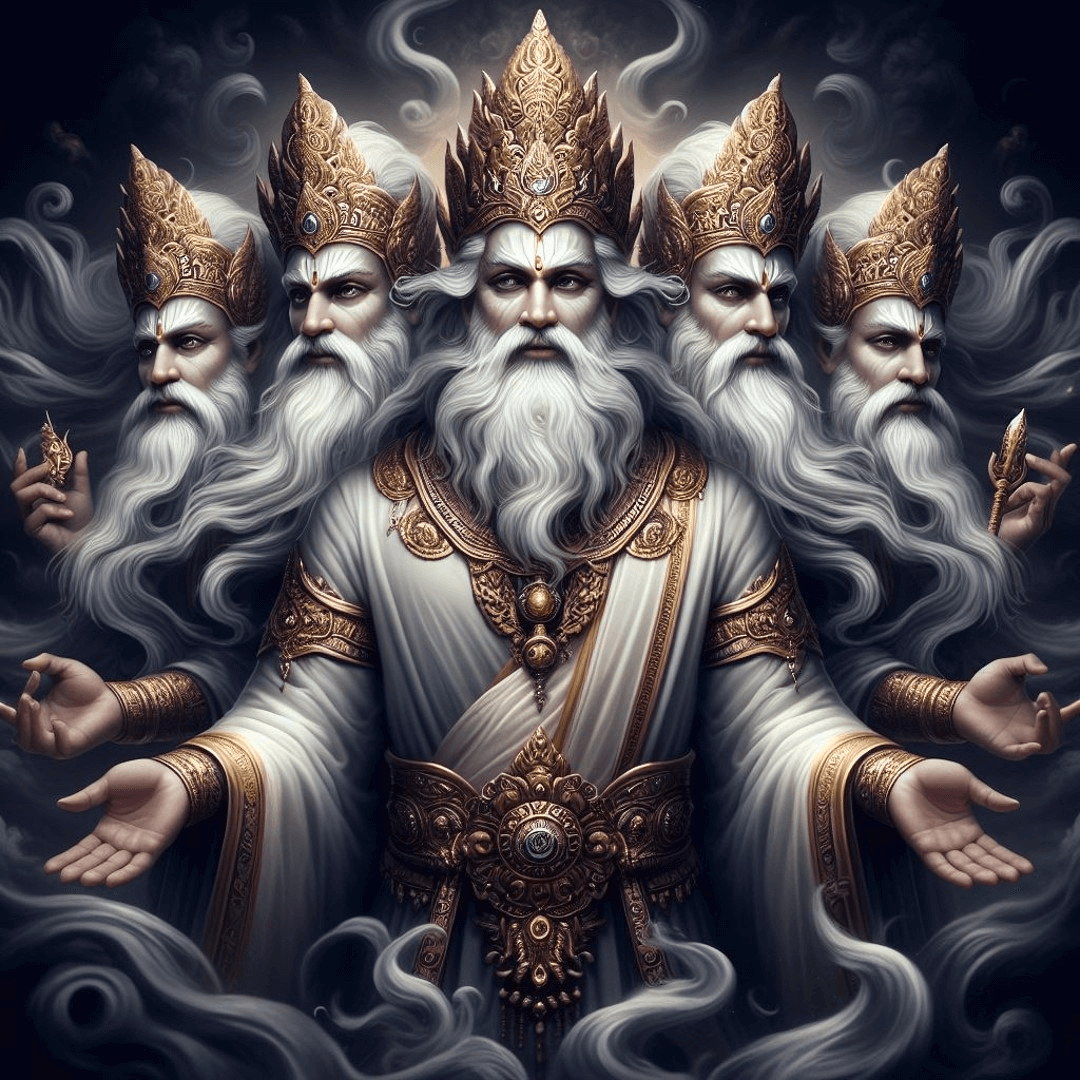
It was up to Brahma to calm the nerves of the Daityas (demons).
The battle scene in the celestial realm was chaos and turmoil as fierce winds swept through the skies, stirring up a tempest of cosmic beings. Thick dark clouds gathered, symbolizing the ill forces at work, while dreadful strong winds howled, foretelling evil times.
It was a scene of celestial chaos, with unseen menaces lurking in the shadows, ready to unleash confusing thoughts and portents of impending doom.
Celestial Chaos
The angelic audience held its breath as chaos erupted onstage. The Daityas, led by the fiery Virūpākṣa, roared their disapproval of the play that dared depict their defeat. Their thunderous voices echoed through the playhouse, shaking the very rafters.
But it wasn’t just their anger that threatened the performance.

विरूपाक्ष पुरोगांश्च विघ्नान्प्रोत्साह्य तेऽब्रुवन् ।
न क्षमिष्यामहे नाट्यमेतदागम्यतामिति ॥ ६५॥

Virūpākṣa purogāṁśca vighnānprotsāhya te'bruvan।
Na kṣamiṣyāmahe nāṭyametadāgamyatāmiti॥ 65॥

Meaning:

Virupaksha and the demon leaders, feeling emboldened by the challenges, declared that they would not allow this situation to continue.
Unseen Menace
Unseen malevolent spirits, the Vighnas, slithered out of the shadows, their forms flickering with dark energy. Weaving their insidious magic, they paralyzed the actors and silenced their voices. Tongues froze mid-sentence, limbs locked in place, and memories fled like startled birds.
The once vibrant performance descended into a chilling tableau of frozen figures.

ततस्तैरसुरैः सार्धं विघ्ना मायामुपाश्रिताः ।
वाचश्चेष्टां स्मृतिं चैव स्तम्भयन्ति स्म नृत्यताम् ॥ ६६॥

Tatastairasuraiḥ sārdhaṁ vighnā māyāmupāśritāḥ।
Vācaśceṣṭāṁ smṛtiṁ caiva stambhayanti sma nṛtyatām॥ 66॥

Meaning:

The demons, using their magical abilities to create obstacles, joined Virupaksha and stopped the dance by preventing everyone from speaking, acting, or even remembering it.

अथापश्यत्सदो विघ्नैः समन्ताद्परिवारितम् ।
सहेतरैः सूत्रधारं नष्टसंज्ञं जडीकृतम् ॥ ६८॥

Athāpaśyatsado vighnaiḥ samantādparivāritam।
Sahetaraiḥ sūtradhāraṁ naṣṭasaṁjñaṁ jaḍīkṛtam॥ 68॥

Meaning:

This verse describes a scene where the stage manager (sūtradhāra) is faced with so many problems that he faints and becomes unable to act.
Fear and confusion rippled through the audience. What had begun as a celebration of divine victory over darkness now teetered on the brink of disaster.
We are here, follow us.
Indra’s Fury
The gods weren’t about to let their vision of theatrical expression be crushed.
Indra, the king of heaven, felt the tremor of unease coursing through the audience.
From his divine insight, Indra saw the Vighnas’ insidious interference. His eyes hardened with righteous fury.

उत्थाय त्वरितं शक्रं गृहीत्वा ध्वजमुत्तमम् ॥
सर्वरत्नोज्ज्वलतनुः किञ्चिदुद्वृत लोचनः ॥६९॥

Utthāya tvaritaṁ śakraṁ gṛhītvā dhvajamuttamam॥
Sarvaratnojjvalatanuḥ kiñcidudvṛta locanaḥ॥ 69॥

Meaning:

This verse portrays Indra, the king of gods, rising quickly. He carries a magnificent flag that is adorned with all kinds of jewels, and his eyes are slightly raised, perhaps in determination or focus.

रङ्गपीठगतान्विघ्नानसुरांश्चैव देवराट् ।
जर्जरीकृतदेहांस्तानकरोज्जर्जरेण सः ॥७०॥

Raṅgapīṭhagatān vighnān surāṁścaiva devarāṭ।
Jarjarīkṛtadehāṁs tān karojjarjareṇa saḥ॥ 70॥

Meaning:

Here Indra, the king of the gods, is confronting demons who create obstacles on the stage. Despite his exhaustion and trembling limbs, Indra bravely faces them.
Indra grasped his mighty banner staff, the Jarjara. This staff was imbued with the power of a storm, crackled with electricity. With a thunderous roar that echoed through the heavens – Indra charged into the fray.
The Jarjara’s Whirlwind
The Jarjara became a whirlwind of divine power, smashing into the ranks of the Vighnas and Daityas. Their dark magic fizzled under its onslaught, dispelled like mist before the rising sun. One by one, daityas were sent reeling. Their threats dissipated like smoke in the wind.
But Indra knew this was just the first skirmish. The Vighnas were cunning adversaries, likely to return with renewed malice. He turned to the other gods, his voice booming across the celestial expanse.

अहो प्रहरणं दिव्यमिदमासादितं त्वया ।
जर्जरीकृतसर्वाङ्गा येनैते दानवाः कृताः ॥७२॥

Aho praharaṇaṁ divyamidamāsāditaṁ tvayā।
Jarjarīkṛtasarvāṅgā yenaitē dānavāḥ kṛtāḥ॥ 72॥

Meaning:

This verse marvels at the incredible accomplishment of the recipient (Indra), who acquired a divine weapon (Jarjara) that left the demons universally weakened in all their limbs.

यस्मादनेन ते विघ्नाः सासुरा जर्जरीकृताः ।
तस्माज्जर्जर एवेति नामतोऽयं भविष्यति ॥७३॥

Yasmādanena te vighnāḥ sāsurā jarjarīkṛtāḥ।
Tasmājjarjara eveti nāmato'yam bhaviṣyati॥ 73॥

Meaning:

The verse states that because of the weakening of the obstacles along with the demons by this celestial feat, they have become feeble. Therefore, they will be known by the name "Jarjara" (meaning feeble) from now on.
INDRA: This playhouse shall stand as a symbol of our creative spirit! Together, we must ensure its protection!
Divine Guardians
Heeding his call, the gods rallied. They became guardians of every aspect of the stage, weaving a web of divine protection against future disruptions. Brahma, the creator, took his place at the heart of the stage, radiating wisdom and stability. Shiva, the destroyer, stood resolute, ready to ward off any further threats. Vishnu, the preserver, ensured the smooth flow of the performance, while Saraswati, the goddess of knowledge and art, bestowed her blessings upon the actors.

दृष्ट्वा नाट्यगृहं ब्रह्मा प्राह सर्वान्सुरांस्ततः ।
अंशभागैर्भवद्भिस्तु रक्ष्योऽयं नाट्यमण्डपः ॥ ८३॥

Dṛṣṭvā nāṭyagṛhaṁ brahmā prāha sarvānsurāṁstataḥ।
Aṁśabhāgairbhavadbhīstu rakṣyo'yaṁ nāṭyamaṇḍapaḥ॥ 83॥

Meaning:

After seeing the theater, Brahma addressed all the gods, instructing them to collectively guard the theater, each contributing "parts and portions" of their divine power to this task.
Thus, the gods became an integral part of the play, not just as characters but as protectors, ensuring that Bharata Muni’s dream could flourish. Though the Daityas may grumble and the Vighnas may plot, the power of creativity, protected by the divine, would not be silenced.
Unease After the Battle
The celestial audience sits stunned, on the stage a tableau of frozen actors caught mid-performance. Indra stands triumphant, Jarjara in hand, amidst the scattered remains of Vighnas and Daityas. But the victory feels hollow. A tense silence hangs in the air.
Suddenly, the gods erupt in worried murmurs.
VARUNA: We cannot simply overpower them, Indra! They will return more vengeful.
MITRA: We must find a way to appease them, to understand their grievance.
All eyes turn to Brahma, who stands serenely at the center of the stage.
BRAHMA: Fear not, my children. I shall speak with them.
Brahma Addresses the Disgruntled Daityas
Brahma raises his hand, silencing the whispers. He turns to the shadows, where the defeated Vighnas and Daityas cower.

विघ्नानां वचनं श्रुत्वा ब्रह्मा वचनमब्रवीत् ।
अलं वो मन्युना दैत्या विषादं त्यजतानघाः ॥ १०५॥

Vighnānāṁ vacanaṁ śrutvā brahmā vacanamabravīt।
Alaṁ vo manyunā daityā viṣādaṁ tyajatānaghāḥ॥ 105॥

Meaning:

Brahma, upon hearing the demons' complaints, said, "Calm yourselves, sinless demons. There's no need for anger and despair."

BRAHMA: Why do you disrupt this celebration, children of darkness? Why do you seek to silence the art of storytelling?
From the shadows steps forward Virupaksha, the leader of the Daityas. His form flickers with anger but also a flicker of uncertainty.
VIRUPAKSHA: You, Brahma, the creator of all, have turned your back on us! This play mocks our defeat and glorifies our enemies! Is this the even-handedness you are known for?
BRAHMA: Anger clouds your judgment, Virupaksha. This art form, Natyaveda, is not meant to divide but to reflect. It will show the triumphs and follies of gods and demons, a mirror to the complexities of existence.
VIRUPAKSHA: But it is born from the gods’ desire, used to paint them in a favorable light!
Brahma smiles gently.
BRAHMA: And will there be no stories of your valor, your struggles? The stage is open to all, a platform to hear all voices. Will you deny yourselves the chance to tell your own tale?
A Seed of Understanding is Sown
Virupaksha hesitates the anger in his eyes dimming. He glances at his companions, who shift uneasily.
BRAHMA: Let go of your resentment, children. Embrace this new art form, and use it to share your truths and your perspectives. Let it be a bridge between light and darkness, not a weapon of division.
A murmur of agreement ripples through the Vighnas and Daityas. Virupaksha nods slowly.
VIRUPAKSHA: Very well, Brahma. We will listen to your words. But know this – we will judge this Natyaveda by its deeds, not its promises.
BRAHMA: And I welcome your judgment, Virupaksha. True art thrives on the diversity of its audience.
Brahma gestures to the actors, frozen on stage. They begin to stir, regaining movement and speech. The play resumes, now tinged with a newfound understanding, a promise of stories yet to be told.
Articles for you about Natya Shastra
- NatyaShastra: The Ancient Blueprint Of Storytelling
- Bharata Muni and the Sages Discuss the Soul of Natyashastra
Share the article
Conclusion
As the play resumes, the atmosphere in the theatre shifts. The anger and resentment that once filled the air slowly dissipated, replaced by a sense of curiosity and anticipation. The audience, a mix of gods, demons, and celestial beings, watch intently as the actors embody characters from both sides of the cosmic divide.
Brahma’s words echo in their minds – this is not just a play but an opportunity to share their truths and perspectives.
As the story unfolds on stage, it becomes clear that Natyaveda can transcend boundaries and bring understanding to even the most divided of audiences.
The Daityas, once brimming with anger and resentment, now listen attentively to the tales. Virupaksha, their leader, though hesitant at first, begins to see the potential in this new art form.
About Natya-Shastra.in
At Natya-Shastra.in, our mission is to serve as a gateway to the illustrious world of the NāṭyaŚāstra, offering insights, resources, and a platform to delve deeper into the nuances of Indian performing arts. We aim to bring forth the richness of this ancient text, shedding light on the profound wisdom it holds and its everlasting influence on various artistic traditions.
We are here, follow us.
Disclaimer:
Affiliate Links: Some links may earn us a commission (at no cost to you). We only recommend helpful products.
NatyaShastra Glossary: Head over to the Natyashastra Glossary page to know the meaning behind Sanskrit terms used in the articles.
Images & Videos: Representational only, not exact depictions.
Knowledge Source: Inspired by ancient Natyashastra scriptures, open to interpretation.
Disclaimer: Educational only, not professional advice. Consult a qualified expert for specific needs.
Offer Your Expertise