Estimated reading time: 6 minutes
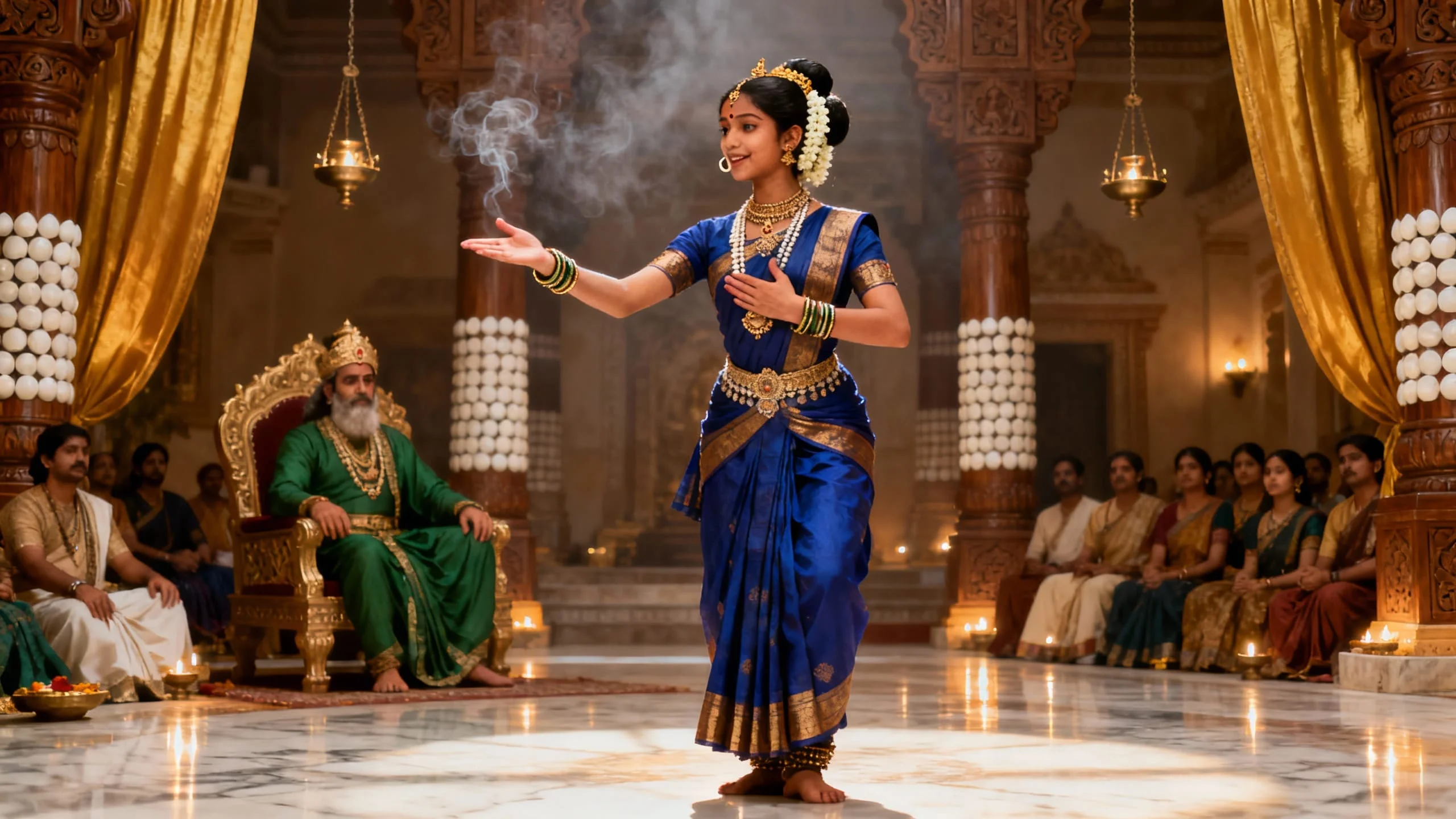
“Speech is the mirror of respect.” This idea lies quietly within Bharata’s Natyashastra, waiting for every dancer and actor to rediscover it. Speaking with grace reveals maryādā, the inner decorum of a character. The modes of address (saṃbhodhana-vidhi) form the emotional bridge between performer and audience, between character and context.
We will see how to apply these ancient rules to your performance today. Let’s transform your enactment from speech to rasa.

We are here, follow us.
Addressing the revered
Great sages and their spouses
When you are speaking or addressing sages, call them “Bhagavan” (holy one). Their wives too share the same reverence.
Stage cue: Maintain a slightly lowered gaze, folded palms, a gentle tone. The voice should carry reverence, not fear.
Gods, spiritual teachers, and ascetics
Use “Bhagavan” again.
When speaking to a rishi, a deva, or a renunciate, let your speech have quiet gravity. The tone should drop slightly, shoulders aligned, breath even. Even a soft “Bhagavan” should sound luminous.
Addressing authority and wisdom
The Brahmin
Use “Ārya” (noble one). It carries dignity. When spoken, let the vowel stretch slightly, as if bowing through your sound.
The king
Address as “Mahārāja” (great king). Use this with both firmness and warmth.
Example in performance:
“Mahārāja, your command is my honour.” Here the hands can move outward in kataka-mukha, symbolising service when speaking.
The teacher
Say “Ācārya” (professor). The tone should be respectful yet intimate. The mentor-śiṣya bhāva should shine through your eyes more than words.
The older men
When speaking to older men, address them as “Tāta” (grand father). Your body softens here and your speech slows down. The energy here is familial, not formal.

Get featured on this blog?
Share your videos and images of you performing classical dance!
We’d love to showcase your talent and passion for classical dance with the world. (with proper credits)
Addressing power with privilege
Brahmins addressing kings
These roles can use the king’s name directly. Bharata allows this liberty, as wisdom outweighs power.
Stage insight: A Brahmin calling the king by name and speaking to him shows moral authority and detachment from hierarchy. The tone is calm, confident, but not arrogant.
Ministers and counsellors
Brahmins here can use “Amātya” or “Saciva” (minister). Others must use “Ārya”. Adjust your posture, stay respectful but not submissive.
Addressing equals
Address equals by their given name or title.
Example: Two princes may call each other “Bhartṛ-dāraka” (young master). Tone here is conversational, easy, and rhythmic. The aim is natural flow, not ornamentation.
Explore Samyuta and Asamyuta Hastas
Addressing inferiors and dependents
Employees, artisans, and artists are to be addressed by their role. It can be a carpenter, painter, or servant. Bharata insists that even these must be spoken with propriety.
To those of lesser respect
Use “Śaumya” (pleasing one) or “Bhadra-mukha” (auspicious-faced one).
Add “He” (O) before the name. Tone should be kind but assertive. Avoid contempt as it destroys rasa.
Addressing with affection and respect
A respected person
Call him “Bhāva” (honoured sir). For slightly less respected, say “Mārṣa” (comrade).
Example:
“Bhāva, your advice brings peace.”
The difference is in your breath. Bhāva has softness, Mārṣa a touch of camaraderie.
Equal companions
Use “Vayasya” (friend or brother). This expresses equality and intimacy.
Addressing the spiritual and royal
Ascetics and serene souls
Say “Sādho” (blessed one). Here keep your body still and your voice mellow. This word itself is meditative.
Crown prince
Use “Svāmin” (sire).
Other princes
Address as “Bhartṛ-dāraka” (young master). Your energy here should mix obedience with admiration.
Addressing family and disciples
Sons and disciples
Call them “Vatsa” (child), “Putraka” (dear son), or by name or clan.
A teacher may also say “Tāta”. Use the affectionate tone, slow, and rounded.
Example:
“Vatsa, hold your mind steady.”
Addressing women’s relationships
A wife to her husband
Say “Ārya-putra” (son of a noble one). This is the voice of love and respect joined. When older or married long, “Ārya” suffices. If the husband is a king, “Mahārāja” fits the context.
Addressing brothers
Elder brother is “Ārya”. Younger brother is addressed as “Vatsa” or like a son.
Addressing kings and by kings
Subjects address the king as “Deva” (lord). Servants of overlords say “Bhaṭṭa” (sire). Sages call the king as “Rājan” or by patronymic. A Jester can use “Vayasya” or “Rājan” with a playful tone. The Queen and her maids are “Bhavati” (lady). When the king speaks to the Jester, he says his name or “Vayasya”.
Each variation reveals the tone, devotion, equality, or jest. All these are integral to abhinaya.
Stage applications and modern practice
These modes guide vocal inflection, emotional hierarchy, and physical gesture.
For example:
- When saying “Mahārāja,” lift the chin slightly and sustain the vowel.
- When saying “Tāta,” let your shoulders soften.
- Saying “Bhagavan,” lower your eyes briefly.
- When saying “Vayasya,” smile naturally. It’s a social sound.
Frequently Asked Questions
They are the rules guiding how characters address others based on social status to express respect on stage.
They bring authenticity and emotional clarity to the performance, helping the audience instantly understand relationships between characters.
Use “Bhagavan” with reverence, a calm tone, and composed body language. Respect must flow through both word and gesture.
It means “son of a noble one.” Traditionally used by women to address their husbands with affection and respect.
Yes. They can be adapted into contemporary performances to retain authenticity while respecting cultural and emotional nuances.
Share the article
Final thoughts
Speech in performance is a sculpted expression. Sage Bharata knew that respect, tone, and word choice shape the emotional truth of a scene. When a dancer says “Ārya” or “Vatsa,” it’s pure relationship speaking.
So next time you step on stage, remember: every address is a bow, every word a gesture. Speak with the grace of Natya.
About Natya-Shastra.in
At Natya-Shastra.in, our mission is to serve as a gateway to the illustrious world of the Natyashastra. We offer insights, resources, and a platform to delve deeper into the nuances of Indian performing arts.
Also, we aim to bring forth the richness of this ancient text. We try to shed light on the profound wisdom it holds and its everlasting influence on various artistic traditions.
We are here, follow us.
Disclaimer:
Affiliate Links: Some links earn us a commission (at no cost to you). We only recommend helpful products.
NatyaShastra Glossary: Head over to the Natyashastra Glossary page to know the meaning behind Sanskrit terms used in the articles.
Images & Videos: Representational only, not exact depictions.
Knowledge Source & References: Inspired by ancient Natyashastra scriptures, open to interpretation.
Offer Your Expertise