Estimated reading time: 7 minutes
The ancient art of storytelling in Hinduism extends beyond mere entertainment. The Natyashastra, a foundational text on performance arts, delves into the world of Rūpaka, meaning “form” or “representation.” Within this framework lies Samavakāra (Samavakara), a specific kind of higher Rūpaka, or drama.
This blog explores a unique connection: how the concept of Samavakāra, a specific type of drama, can inform how we approach life’s goals.
The principles inherent in Samavakāra, emphasizes a balanced approach, contributing to a fulfilling life that upholds Dharma (righteous duty), Kama (desires), and Artha (material security).
We’ll explore how the structure and themes of Samavakāra drama can guide us toward leading a balanced and meaningful life.

What is Samavakāra?
Samavakara is a specific type of higher drama that embodies the essence of balance and harmony. Just as every well-crafted play has a balanced mix of characters, plotlines, and themes, so too can applying the principles of Samavakāra lead to a harmonious life.
In the context of Dharma, Samavakāra teaches us the importance of fulfilling our righteous duties without neglecting our desires (Kama) or material security (Artha).

योऽयं समवकारस्तु धर्मकामार्थसाधकः ।
मया प्राग्ग्रथितो विद्वांस्त्वं प्रयोगः प्रयुज्यताम् ॥ ३॥

Yo'yaṁ samavakārastu dharmakāmārthasādhakaḥ।
Mayā prāggrathito vidvāṁstvaṁ prayogaḥ prayujyatām॥ 3॥

Meaning:

Let this higher form of expression (rUpaka), accomplish righteousness (Dharma), desires (Kama), and wealth (Artha), and which has been previously composed by me, be employed by you, O wise person!
We are here, follow us.
Here’s a breakdown of its key features:
- Mythological Focus: Samavakara plays revolve around stories from mythology, featuring well-known gods and demons (Asuras) as the main characters (heroes).
- Structure: The drama unfolds in three acts, with a specific time allotment. The first act takes the longest (12 Nadikas, roughly 4 hours and 36 minutes), followed by the second (4 Nadikas, or 1 hour and 24 minutes), and the concluding act is the shortest (2 Nadikas, or 48 minutes).
- Themes: The play’s subject matter typically explores deception, excitement, or love.
- Character Limit: Samavakara dramas have a limit of twelve characters.
- Language: The play utilizes complex meters in its dialogue and verse.
- Similarities and Differences: Samavakara shares some characteristics with another dramatic form called Dima, such as having four segments (sandhis) and avoiding a specific dramatic pause (vimarśa).

.jpg)
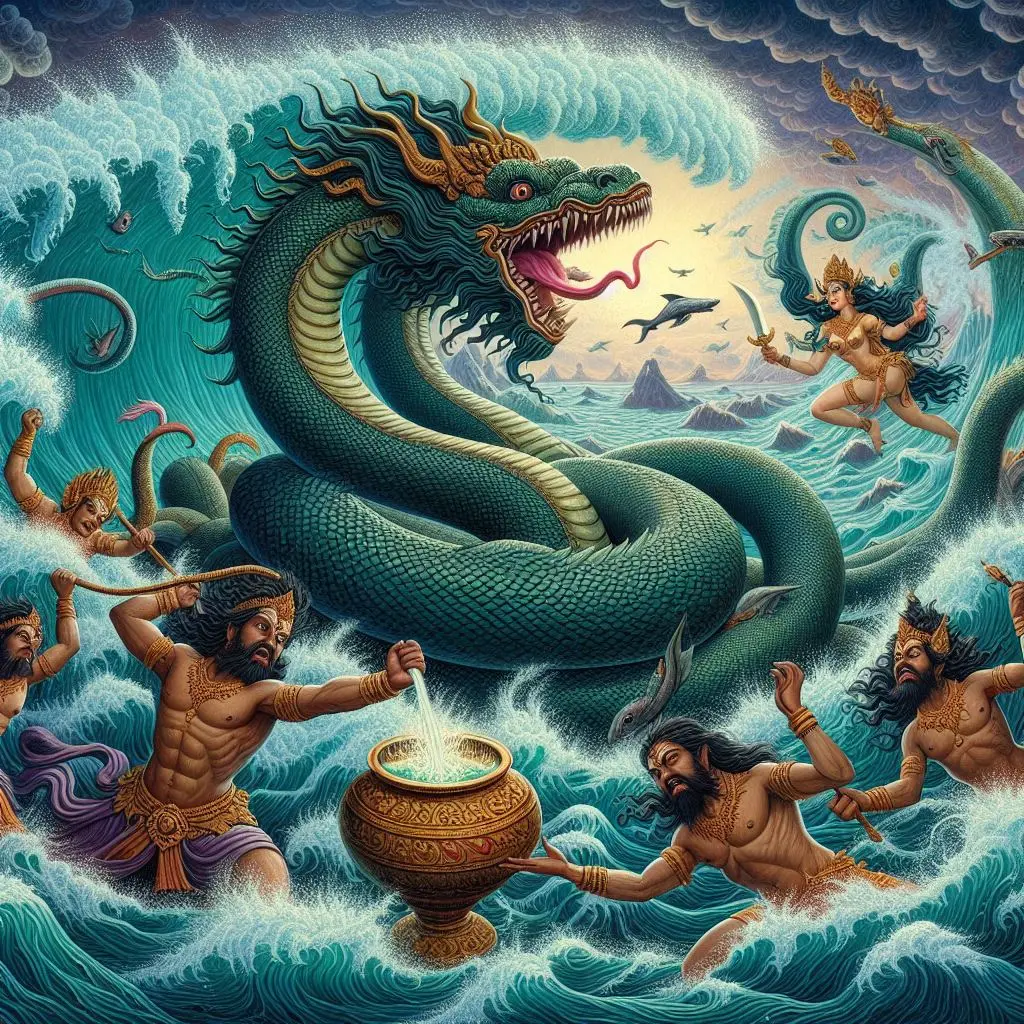
Example: The play “Samudramanthana” (The Churning of the Ocean) is a classic example of a Samavakāra drama. The story revolves around the churning of the cosmic ocean of milk by Devas (gods) and Asuras (demons) to obtain Amrita (the elixir of immortality).
How is Samavakāra conducive to Dharma (duties), Kama (Desires), and Artha (Wealth)?
While Samavakara itself refers to a specific type of drama within Hinduism, the concept behind its structure offers valuable insights into how to achieve a balanced life that upholds Dharma (duties), Kama (desires), and Artha (wealth). Here’s how:
Structure and Balance:
- Three Acts: The three-act structure of a Samavakara play is a metaphor for the different stages of life.
- The first act, being the longest, represents the initial foundation – a time to focus on establishing oneself in terms of Dharma (education, career) and Artha (financial security).
- The second act is of moderate duration, signifying a time to integrate healthy desires (Kama) alongside fulfilling duties and financial goals.
- Finally, the concluding act, being the shortest, emphasizes the importance of achieving a harmonious culmination where all three aspects – Dharma, Kama, and Artha – coexist peacefully.
Theme and Fulfillment:
- Deception, Excitement, and Love: The core themes of a Samavakara play are deception, excitement, and love. Deception can symbolize overcoming challenges, excitement reflects the pursuit of aspirations, and love signifies the importance of desires within ethical boundaries. Samavakara suggests that a fulfilling life integrates them all by acknowledging these complexities within the dramatic framework.
Limited Characters and Focus:
- Twelve Characters: The limitation of twelve characters in a Samavakara drama emphasizes prioritizing what truly matters. Just as the play focuses on a core set of characters, focusing on a balanced pursuit of Dharma, Kama and Artha avoid getting overwhelmed by distractions.
Language and Complexity:
- Complex Meters: The use of complex meters in the dialogue and verse of a Samavakara play signifies the depth and nuance required to navigate the pursuit of Dharma, Kama, and Artha. It suggests that achieving a balanced life isn’t a simple task but requires thoughtful consideration and effort.
Articles for you about Natya Shastra
- NatyaShastra: The Ancient Blueprint Of Storytelling
- Bharata Muni and the Sages Discuss the Soul of Natyashastra
- The Birth Of NatyaVeda
- Who Was Bharata Muni And His 100 Sons?
- The Birth of the Apsaras for the Kaishiki Style
- The Origins of Indian Theatre as per NatyaShastra
Share the article
Frequently Asked Questions
Samavakara is a specific type of higher drama within ancient Indian theatre. It features mythological stories with well-known gods and demons as heroes, unfolds in three acts with specific time allotments, and explores themes like deception, excitement, and love. While the format itself is fascinating, the concept behind Samavakara’s structure offers valuable insights into a balanced life.
The three acts of a Samavakara play can be seen as metaphors for life stages. The long first act represents building a foundation – focusing on education, career (Dharma), and financial security (Artha). The second act signifies integrating healthy desires (Kama) alongside duties and financial goals. Finally, the short concluding act emphasizes achieving a harmonious balance where all three aspects – Dharma, Kama, and Artha – coexist peacefully.
Samavakara dramas explore themes like deception (overcoming challenges), excitement (pursuing aspirations), and love (importance of desires within ethical boundaries). By acknowledging these complexities, Samavakara suggests that a fulfilling life integrates them all.
The restriction of twelve characters in a Samavakara play emphasizes prioritizing what truly matters. Similarly, focusing on a balanced pursuit of Dharma, Kama, and Artha helps us avoid being overwhelmed by distractions and allows us to dedicate energy to what’s truly important.
The complex meters in the dialogue and verse represent the depth and nuance required to navigate the pursuit of Dharma, Kama, and Artha. Achieving a balanced life isn’t a simple task; it requires thoughtful consideration and effort.
Conclusion
The ancient Indian dramatic form of Samavakara, while intriguing in its structure and themes, offers a surprisingly profound message for modern life.
We can learn to approach our own goals with a balanced perspective by understanding the principles woven into its very framework.
Samavakara reminds us to prioritize our duties (Dharma), integrate desires (Kama) ethically, and achieve financial security (Artha) – all essential ingredients for a harmonious and meaningful existence.
About Natya-Shastra.in
At Natya-Shastra.in, our mission is to serve as a gateway to the illustrious world of the NāṭyaŚāstra, offering insights, resources, and a platform to delve deeper into the nuances of Indian performing arts. We aim to bring forth the richness of this ancient text, shedding light on the profound wisdom it holds and its everlasting influence on various artistic traditions.
We are here, follow us.
Disclaimer:
Affiliate Links: Some links may earn us a commission (at no cost to you). We only recommend helpful products.
NatyaShastra Glossary: Head over to the Natyashastra Glossary page to know the meaning behind Sanskrit terms used in the articles.
Images & Videos: Representational only, not exact depictions.
Knowledge Source: Inspired by ancient Natyashastra scriptures, open to interpretation.
Disclaimer: Educational only, not professional advice. Consult a qualified expert for specific needs.
Offer Your Expertise