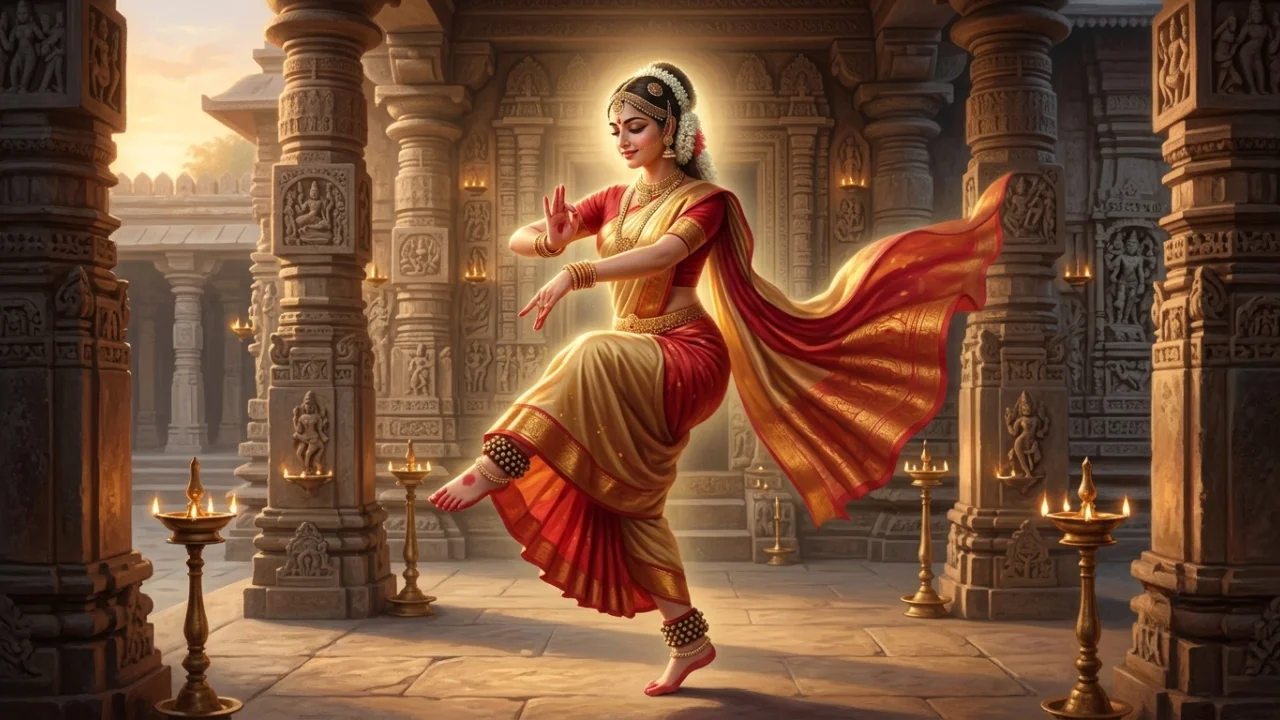
Not simply beautiful dancers, the apsaras held a secret power. According to the ancient Natya Shastra, these heavenly beings were created by Brahma not for mere entertainment but for a divine purpose tied to the very essence of drama.
What was this mission, and how did these celestial maidens influence the fate of gods and mortals?
Come! Let’s understand the captivating world of the apsaras, where myth, mystery, and the power of performance intertwine.

Kaishiki Style Of Dance
The Kaishiki (Kaiśikī) style, known for its elegance and grace, was deemed particularly suited to women. However, Bharata Muni states that men faced challenges in fully embodying Kaishiki’s essence without the help of female performers.
Kaishiki Definition:
- Meaning: “Kaishiki” translates to “graceful” or “feminine.”
- Emphasis: Primarily focused on delicate and elegant movements, emphasizing beauty and charm.
- Expressions: Associated with the “Lasya” aspect of Natya, conveying gentle emotions like love, joy, and playfulness.
Kaishiki’s movements have a unique quality that sets it apart from other dance styles. The dancers (male and female) glide across the stage with fluidity, effortlessly merging their bodies and souls with the rhythm of the music. It is as if they embody the gracefulness of celestial beings, drawing inspiration from the divine.

दीयतां भगवन्द्रव्यं कैशिक्याः सम्प्रयोजकम् ।
नृत्ताङ्गहारसम्पन्ना रसभावक्रियात्मिका ॥ ४४॥

Dīyatāṁ bhagavandravyaṁ kaiśikyāḥ samprayojakam।
Nṛttāṅgahārasampannā rasabhāvakriyātmikā॥ 44॥

Meaning:

Oh respected one, please grant us the blessings of Kaiśikī's wealth. This wealth should bring joy, music, dance, and the beautiful expressions of human emotions.
In the mesmerizing world of Kaishiki, every movement, every gesture, and every expression holds profound meaning.
The dance style pays homage to Hindu gods, particularly Lord Shiva and Lord Krishna, whose tales weaves into the fabric of Indian mythology and culture.

दृष्टा मया भगवतो नीलकण्ठस्य नृत्यतः ।
कैशिकी ष्लक्ष्णनैपथ्या शृङ्गाररससम्भवा ॥ ४५॥
Dṛṣṭā mayā bhagavato nīlakaṇṭhasya nṛtyataḥ।
Kaiśikī ṣlaḳṣṇanaipathyā śṛṅgārarasasambhavā॥ 45॥
Meaning:
I saw the respected one (Lord Shiva) dance, their movements graceful and gentle. As they danced, Kaiśikī filled the air with love, a feeling that touched everyone present.
We are here, follow us.
The Divine Intervention To Equip Kaishiki Style
Kaishiki, with its ethereal grace, cannot be fully realized by men alone. It requires the delicate touch of women. It is about their innate understanding of movement, expression, and embellishment.

अशक्या पुरुषैः सा तु प्रयोक्तुं स्त्रीजनादृते ।
ततोऽसृजन्महातेजा मनसाऽप्सरसो विभुः ॥ ४६॥

Aśakyā puruṣaiḥ sā tu prayoktuṁ strījanādṛte।
Tato'sṛjanmahātejā manasā'psaraso vibhuḥ॥ 46॥

Meaning:

Impossible for men to use (Kaiśikī) to complete extent, but cherished by women, then (Brahma) released, the greatly radiant Lord of celestial nymphs (Apsaras) by the mind.
To bridge this gap, Lord Brahma, in his immense creative power, brought forth a group of nymphs (apsaras) from his mind. These weren’t ordinary nymphs; they were skilled artists, specifically designed to “embellish the drama” and support the male performers in their Kaishiki style enactment.
Creation of Apsaras (Nymphs)
Created to bring grace, beauty, and elegance to the world, the Apsaras embody the divine artistry of Lord Brahma, the creator god, who envisioned these celestial beings. Their creation is a testament to the divine’s ability to infuse grace and allure into every facet of creation.
The Apsaras, with their mesmerizing beauty and captivating movements, have inspired countless artists, musicians, and dancers throughout history. Their gracefulness unbounds earthly limitations and transcends the human realm, making them a perfect muse for the Kaishiki dance style.
The Natya Shastra mentions 24 of these celestial maidens by name:
- Mañjukeśī
- Sukeśī
- Miśrakeśi
- Sulocanā
- Saudāminī
- Devadattā
- Devasenā
- Manoramā
- Sudatī
- Sundarī
- Vidagdhā
- Sumālā
- Santati
- Sunandā
- Sumukhī
- Māgadhī
- Arjunī
- Saralā
- Keralā
- Dhṛti
- Nandā
- Supuṣkalā
- Kalabhā
These names, each with unique meaning and beauty, paint a picture of a diverse and talented group of artists.
The Apsaras’ Role in Kaishiki
The apsaras possessed otherworldly abilities along with skilled dancing and singing . They could control the weather, influence human emotions, and even captivate the hearts of gods and men with their charm.
Their impact extended far beyond the stage. The apsaras became prominent figures in Hindu mythology, often depicted in art and literature as symbols of grace, beauty, and artistic excellence.

In the Kaishiki style, dancers emulate the grace and allure of the Apsaras, bringing their celestial charm to life through their movements.
The Apsaras symbolize the divine intervention that blessed the Kaishiki style with its ethereal nature, shining a light on the gods’ influence on this mesmerizing dance style.
Men and Gracefulness?
When one thinks of gracefulness, the image of women often comes to mind. However, in the Kaishiki style, grace knows no gender boundaries. Men (just like women) must embody grace, fluidity, and elegance in their movements.
Kaishiki celebrates the harmonious blend of masculinity and grace, challenging traditional notions of gender stereotypes. Male dancers in this style evoke powerful yet graceful expressions, showcasing their strength through fluid movements that captivate audiences.

“Ardhanareshwara”, where half of the body represents the male aspect (Shiva) and the other half represents the female aspect (Shakti or Parvati), the very image of cosmic balance, integrates both the dynamic and the serene. Shouldn’t we, mere mortals as we are, strive for the same wholeness? Why not embrace the full range of our emotions and expressions, allowing them to shape our unique beauty?
Related articles
Share the article
Frequently Asked Questions
According to the Natya Shastra, Brahma envisioned the apsaras as performers of the Kaishiki style, a dance emphasizing the power and passion of artistic expression.
As mythical beings, pinpointing their exact creation in linear time is impossible. However, mythological stories tell us more about the symbolism and significance of the apsaras rather than offering a historical timeline.
Male dancers in the Kaishiki style embrace gracefulness by incorporating fluid movements and elegant expressions into their performances. They embody a unique blend of strength and poise, challenging traditional gender norms while showcasing their artistry.
Through meticulous training and practice, these dancers master the art of conveying power and grace in their movements, captivating audiences with their mesmerizing performances.
Male dancers in the Kaishiki style redefine masculinity and demonstrate that grace knows no gender boundaries by embracing the full range of their emotions and expressions.
The Kaishiki style underlines grace, fluidity, and intricate footwork.
Unlike other dance styles, such as Bharati, Satvathi, and Arabhati, the Kaishiki stresses storytelling through movement.
While Bharati focuses on rhythmic footwork and expressive hand gestures, Satvathi emphasizes powerful movements and dramatic expressions. Arabhati, on the other hand, showcases vigorous and dynamic dance sequences.
In the Kaishiki style, every movement conveys a narrative or story. Dancers use their bodies to interpret emotions, depict characters, and express themes. The fluidity of their movements creates a seamless flow that draws audiences in and transports them into the world of the performance.
Learning and mastering the Kaishiki Style dance technique requires several years of dedicated practice. Find a reputable teacher or school to guide you through the learning process. Consistent practice with discipline improves your skills in Kaishiki-style dance. Continuing to refine your technique even after mastering the basics is recommended.
Conclusion
In conclusion, the Kaishiki dance style is a beautiful and graceful art form of ancient traditions.
The Apsaras bring a sense of enchantment and elegance to the Kaishiki style, captivating audiences with their divine beauty and mesmerizing movements.
This unique dance style has influenced modern dance forms and continues to be admired and practiced by world artists.
About Natya-Shastra.in
At Natya-Shastra.in, our mission is to serve as a gateway to the illustrious world of the Natyashastra. We offer insights, resources, and a platform to delve deeper into the nuances of Indian performing arts.
Also, we aim to bring forth the richness of this ancient text. We try to shed light on the profound wisdom it holds and its everlasting influence on various artistic traditions.
We are here, follow us.
Disclaimer:
Affiliate Links: Some links earn us a commission (at no cost to you). We only recommend helpful products.
NatyaShastra Glossary: Head over to the Natyashastra Glossary page to know the meaning behind Sanskrit terms used in the articles.
Images & Videos: Representational only, not exact depictions.
Knowledge Source & References: Inspired by ancient Natyashastra scriptures, open to interpretation.

Offer Your Expertise