Estimated reading time: 6 minutes
Karuna! Imagine a scene where a beloved character faces the sudden loss of a dear one. The air is thick with grief, and the audience feels a collective pang of sorrow.
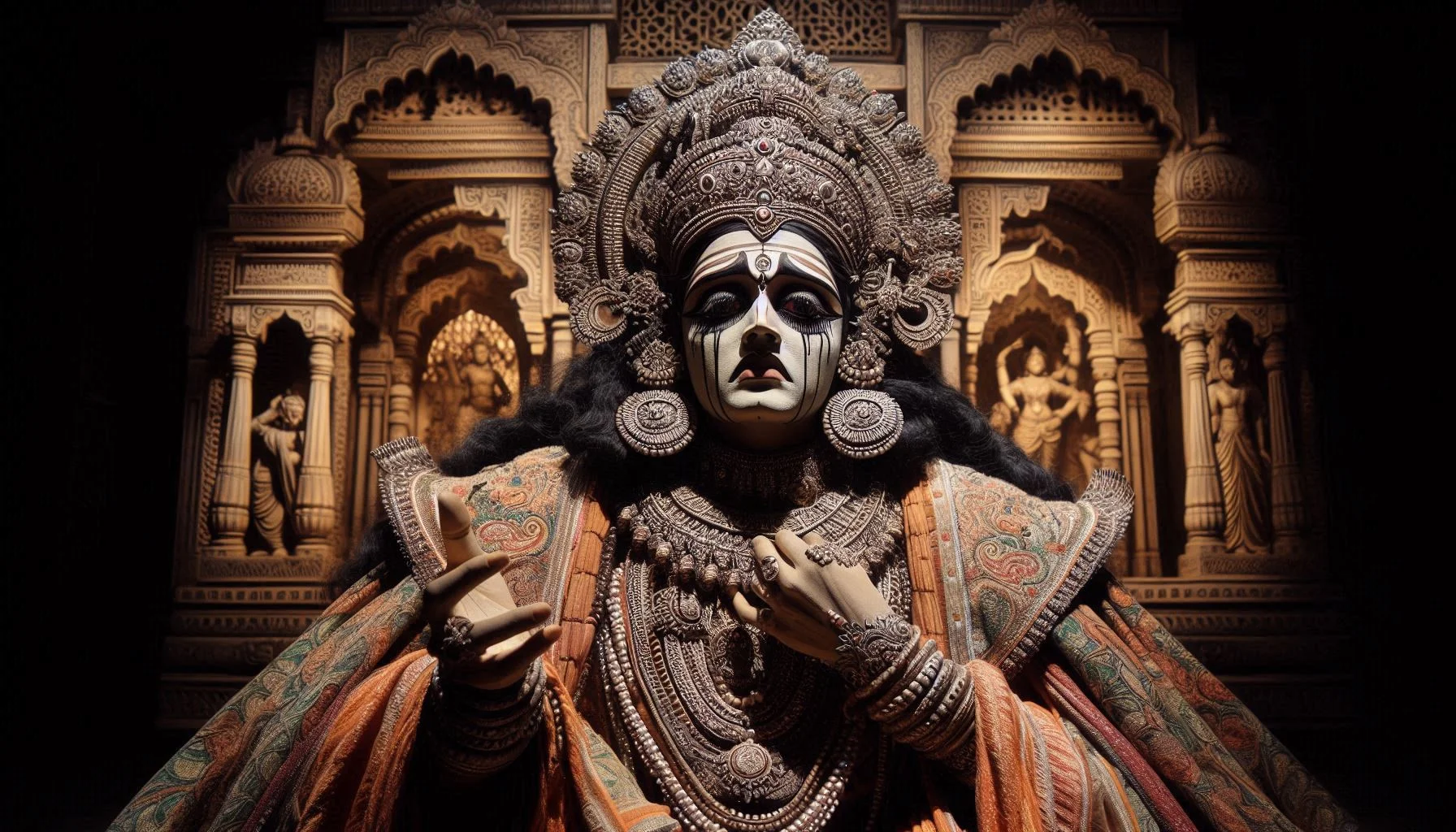
Tears flow, hearts ache, and the atmosphere is imbued with a profound sense of loss. This powerful emotion, meticulously crafted and vividly portrayed, is known as Karuna Rasa, one of the Rasas or aesthetic sentiments in Bharata Muni‘s Nāṭyaśāstra.
In this blog, we delve into the intricate layers of Karuṇa Rasa, exploring its origins, expressions, and the transient states that enhance its impact.

Karuna: The Root of Sorrow

अथ करुणो नाम शोकस्थायिभावप्रभवः ।

atha karuṇo nāma śokasthāyibhāvaprabhavaḥ |

Meaning:

Now, Karuṇa (Pathos) is characterized by the permanent mood of grief (Śoka).
The essence of Karuna Rasa is deeply rooted in the permanent mood of grief, known as Śoka. This foundational emotion serves as the bedrock from which the sentiment of Karuṇa emerges, setting the stage for a dramatic portrayal of sorrow.
We are here, follow us.
Karuna Rasa Equation
To provide a simplified understanding, we can represent Karuṇa Rasa with an equation that combines its primary elements:
Karuṇa Rasa=Śoka (Grief)+Vibhāvas (Determinants)+Anubhāvas (Expressions)+Vyabhicāribhāvas (Transitory States)
Breaking down the components:
- Śoka (Grief): The permanent mood or foundation.
- Vibhāvas (Determinants): Causes like curses, distress, separation from loved ones, etc.
- Anubhāvas (Expressions): Physical and emotional manifestations such as tears, lamentation, paleness, etc.
- Vyabhicāribhāvas (Transitory States): Temporary emotions like anxiety, fear, depression, and other related feelings.
Karuna: The Determinants of Grief

स च शापक्लेशविनिपतितेष्टजनविप्रयोगविभवनाशवधबन्धविद्रवोपघात-व्यसनसंयोगादिभिर्विभावैः समुपजायते ।

sa ca śāpakleśavinipatiteṣṭajanaviprayogavibhavanāśavadhabandhavidravopaghāta-vyasanasaṃyogādibhirvibhāvaiḥ samupajāyate |

Meaning:

It arises from determinants (Vibhāvas) such as curse, distress, the downfall or separation of loved ones, loss of wealth, death, killing, captivity, fleeing, injury, and association with calamities.
Karuṇa Rasa evokes specific causes or determinants, known as Vibhāvas.
These include a wide range of tragic events such as,
- Curses
- Distress
- Separation from loved ones
- Loss of wealth
- Death
- Captivity
- Calamities

Get featured on this blog?
Submit your videos and images of you performing classical dance!
We’d love to showcase your talent and passion for classical dance with the world.
Karuṇa: The Expressions of Sorrow

तस्याश्रुपातपरिदेवनमुखशोषणवैवर्ण्यस्रस्तगात्रतानिश्श्वास-स्मृतिलोपादिभिरनुभावैरभिनयः प्रयोक्तव्यः ।

tasyāśrupātaparidevanamukhaśoṣaṇavaivarṇyasrastagātratāniśśvāsa-smṛtilopādibhiranubhāvairabhinayaḥ prayoktavyaḥ |

Meaning:

Its expression (Abhinaya) is through Anubhāvas (ensuing emotions), such as shedding tears, lamentation, drying up of the face, paleness, loosening limbs, sighing, and memory loss.
The expression of Karuṇa Rasa is conveyed through physical and emotional manifestations, known as Anubhāvas.
These include,
- Shedding tears
- Lamentation
- Paleness
- Loosening of limbs
- Sighing
- Loss of memory
Karuṇa: The Transitory States of Sorrow

व्यभिचारिणश्चास्य निर्वेदग्लानिचिन्तौत्सुक्यावेगभ्रममोहश्रमभयविषाददैन्यव्याधिजडतोन्मादापस्मारत्रासालस्यमरणस्तम्भवेपथुवैवर्ण्याश्रु-स्वरभेदादयः ।

vyabhicāriṇaścāsya nirvedaglānicintautsukyāvegabhramamohaśramabhayaviṣādadainyavyādhijaḍatonmādāpasmāratrāsālasyamaraṇastambhavepathuvaivarṇyāśru-svarabhedādayaḥ |

Meaning:

Its transitory states (Vyabhicāribhāvas) include despair, weakness, anxiety, restlessness, agitation, delusion, fatigue, fear, depression, misery, sickness, stupor, insanity, epilepsy, terror, lethargy, death, paralysis, trembling, paleness, tears, and voice changes.
The sentiment of Karuṇa further enriches various transient emotions, known as Vyabhicāribhāvas.
These include a broad spectrum of feelings such as,
- Despondency
- Anxiety
- Fear
- Depression
- Sickness
- Death.
These fleeting states enhance the portrayal of sorrow, making the emotional experience more profound and relatable.
Articles for you about NatyaShastra
- NatyaShastra: The Ancient Blueprint Of Storytelling
- Bharata Muni and the Sages Discuss the Soul of Natyashastra
- Three Definitions Of Natya (Drama)
- The Birth Of NatyaVeda
- Who Was Bharata Muni And His 100 Sons?
- The Birth of the Apsaras for the Kaishiki Style
- The Origins of Indian Theatre as per NatyaShastra
- Two Kinds of Preliminaries in Classical Indian Dance
- Recaka in Indian Classical Dance: Nuances of Movement
- Pindibandha: India’s Ancient Group Dance Technique As Explained In Natyashastra
- Angaharas: The Building Blocks of Indian Classical Dance
- Samyuta Hastas: 24 Double Hand Gestures as per Shastras
- Asamyuta Hastas: 28 Single Hand Gestures as per Shastras
Share the article
Frequently Asked Questions
Karuṇa Rasa is the sentiment of sorrow, rooted in grief (Śoka), evoked through various tragic events, and expressed in dramatic performances.
Causes include curses, distress, separation from loved ones, loss, death, captivity, and calamities, leading to deep sorrow.
It is expressed through tears, lamentation, paleness, sighing, and loss of memory, conveying the depth of sorrow.
Transitory states include anxiety, fear, depression, sickness, trembling, and changes in voice, enhancing the portrayal of sorrow.
It states Karuṇa arises from witnessing tragic events or hearing unpleasant words, emphasizing deep sorrow.
Conclusion
Karuna Rasa, the sentiment of sorrow, is a testament to the depth and sophistication of Bharata Muni‘s Nāṭyaśāstra. Through its detailed exploration of grief and its myriad expressions, this ancient treatise offers profound insights into the human experience of sorrow.
By understanding the interplay of Śoka (grief), Vibhāvas (determinants), Anubhāvas (expressions), and Vyabhicāribhāvas (transitory states), we gain a deeper appreciation for the emotional richness that Karuṇa Rasa brings to dramatic performances.
The timeless wisdom encapsulated in Karuṇa Rasa resonates, reminding us of the enduring power of well-crafted sorrow in the arts.
About Natya-Shastra.in
At Natya-Shastra.in, our mission is to serve as a gateway to the illustrious world of the NāṭyaŚāstra, offering insights, resources, and a platform to delve deeper into the nuances of Indian performing arts. We aim to bring forth the richness of this ancient text, shedding light on the profound wisdom it holds and its everlasting influence on various artistic traditions.
We are here, follow us.
Disclaimer:
Affiliate Links: Some links may earn us a commission (at no cost to you). We only recommend helpful products.
NatyaShastra Glossary: Head over to the Natyashastra Glossary page to know the meaning behind Sanskrit terms used in the articles.
Images & Videos: Representational only, not exact depictions.
Knowledge Source & References: Inspired by ancient Natyashastra scriptures, open to interpretation.
Disclaimer: Educational only, not professional advice. Consult a qualified expert for specific needs
Offer Your Expertise