Estimated reading time: 0 minutes
The glamorous world of Indian classical dance is steeped in tradition and spirituality. Every movement, every expression, tells a story that transcends mere entertainment. One of the most significant rituals performed at the start of every dance performance is the Pushpanjali, a graceful offering of flowers with folded palms. But what is the deeper meaning behind this simple gesture?
The answer lies in a fascinating story from the ancient Hindu text, the Natya Shastra.
What is Pushpanjali?
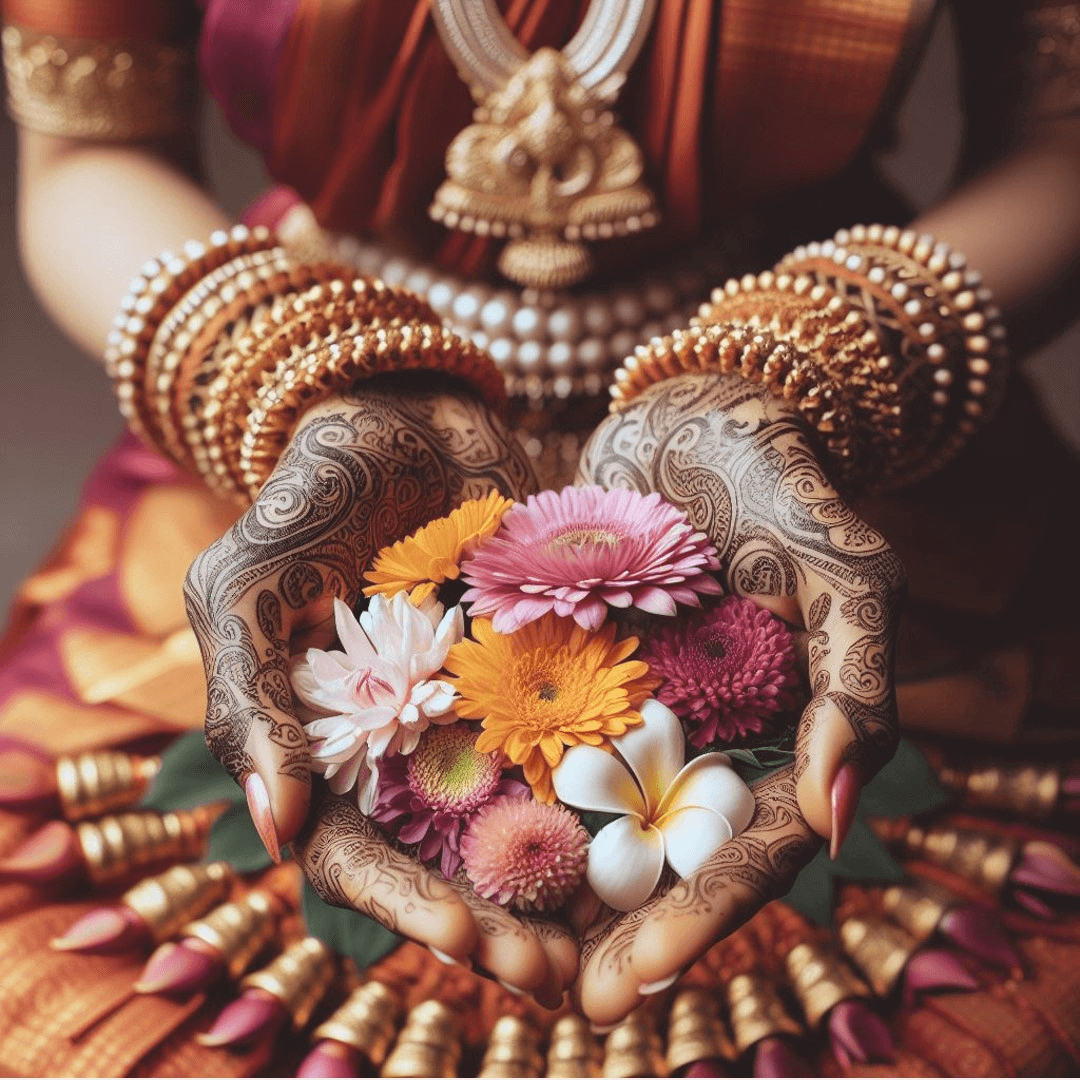
Pushpanjali, which translates to “an offering of flowers,” is a sacred and soulful invocation performed at the beginning of classical dance recitals. It is an integral part of Indian classical dance, often regarded as the purest form of dance expression. During Pushpanjali, the dancer pays homage to the deities, seeking their blessings and guidance for a successful performance.
The dance form of Pushpanjali involves precise hand gestures, facial expressions, and pure dance movements. It is a harmonious blend of art, devotion, and discipline.
The dancer offers flowers to the gods and goddesses, symbolizing reverence, gratitude, and devotion. This offering of flowers creates an auspicious atmosphere, preparing the dancer, the stage, and the audience for a divine experience.

But First, Let’s Know The Threat of Vighnas
Bharata Muni wasn’t alone in his endeavor. As he meticulously crafted the playhouse, a concern arose – the Vighnas, mischievous beings intent on disrupting performances, threatened to cast their shadow. Recognizing the potential havoc, Bharata Muni, his sons, and Indra approached Lord Brahma, the creator god, seeking guidance.

निश्चिता भगवन्विघ्ना नाट्यस्यास्य विनाशने ।
अस्य रक्षाविधिं सम्यगाज्ञापय सुरेश्वर ॥७८॥
Niścitā bhagavanvighnā nāṭyasyāsya vināśane।
Asya rakṣāvidhiṁ samyagājñāpaya sureśvara॥ 78॥
Meaning:
Divine protector, unforeseen challenges threaten the play’s demise. Guide us, o mighty one, on how to safeguard it.
We are here, follow us.
Now, The Stage Needs Protection.
Brahma, understanding the importance of preserving this artistic expression, instructed Visvakarma to construct the highest-quality playhouse.
It wasn’t merely a stage but a sacred space designed to nurture creativity and ward off disruptions.

ततश्च विश्वकर्माणं ब्रह्मोवाच प्रयत्नतः ।
कुरु लक्षणसम्पन्नं नाट्यवेश्म महामते ॥७९॥
Tataśca viśvakarmāṇaṁ brahmovāca prayatnataḥ।
Kuru lakṣaṇasampannaṁ nāṭyaveśma mahāmate॥ 79॥
Meaning:
Then, Brahma said to Vishvakarman, ‘Build a special theater, wise one.
Visvakarma heeded Brahma’s advice and constructed a magnificent playhouse. But the physical structure alone wasn’t enough. To ensure uninterrupted performances, Brahma assigned specific roles to various deities.
From the moon god overseeing the main building to powerful demigods protecting the stage and instruments, each element had divine protection.
Roles assigned to various deities in the building:

दृष्ट्वा नाट्यगृहं ब्रह्मा प्राह सर्वान्सुरांस्ततः ।
अंशभागैर्भवद्भिस्तु रक्ष्योऽयं नाट्यमण्डपः ॥ ८३॥
Dṛṣṭvā nāṭyagṛhaṁ brahmā prāha sarvānsurāṁstataḥ।
Aṁśabhāgairbhavadbhistu rakṣyo’yaṁ nāṭyamaṇḍapaḥ॥ 83॥
Meaning:
Seeing the theater, Brahma told the gods, ‘Together, you must guard it.
Protection:
- Main building: Chandra (moon god)
- Sides: Lokapālas (guardians of the worlds)
- Four corners: Maruts
- Within building: Varuṇa
- Tiring room: Mitra
- Stage: Agni
- Ground: Ocean-god
Other elements:
- Musical instruments: Clouds
- Pillars: Deities of four Colour-groups
- Space between pillars: Ādityas and the Rudras
- The railing of seats: Bhūtas (spirits)
- Rooms: Apsarasas
- Entire house: Yakṣiṇīs
- Door: Yama
- Door blades: Two Nāga kings (Ananta and Vāsuki)
- Door-frame: Rod of Yama
- Top of door: Pike of Śiva
Special placements:
- Mattavāraṇī: Lightning, protected by Bhūtas, Yakṣas, Piśācas, and Guhyakas
- Jarjara: Vajra (thunder), guarded by powerful gods
- Jarjara’s topmost section: Brahmā
- Jarjara’s second section: Śiva
- Jarjara’s third section: Viṣṇu
- Jarjara’s fourth section: Kārtikeya
- Jarjara’s fifth section: Great Nāgas like Śeṣa, Vāsukī, and Takṣaka
- Niyati and Yama (mṛtyu) were made doorkeepers.
- Indra himself stayed by the side of the stage.
The Significance of Flowers To Honor the Guardians
As mentioned in the Natya Shastra, the scattering of flowers on the stage served as a symbolic offering of gratitude and respect to these divine guardians. It signified an acknowledgment of their blessings and a plea for continued protection during the performance.
Additionally, the offerings should encompass both solid and liquid food items. Brahma explained that by following these steps, the gods would receive joyful adoration from mortals.

मर्त्यलोकगताः सर्वे शुभां पूजामवाप्स्यथ ।
अपूजयित्वा रङ्गं तु नैव प्रेक्षां प्रवर्तयेत् ॥ १२२॥
Martyalokagatāḥ sarve śubhāṁ pūjāmavāpsyatha।
Apūjayitvā raṅgaṁ tu naiva prekṣāṁ pravartayet॥ 122॥
Meaning:
This verse says everyone gets good things by worshipping. But don’t start a show without worshipping first.
He emphasized that no dramatic performance (prekṣā) should commence without first offering worship (Pūjā) to the stage itself.
(Remember the fruits, water, and flowers we offer Lord Nataraja and the Dance floor before the performance.)
Pushpanjali
The Pushpanjali, performed by dancers today, carries forward this ancient tradition. As they bend with folded palms and offer flowers, they pay homage to the divine protectors and the lineage of gurus and ancestors who have preserved this art form.
Further, the Pushpanjali serves as a moment of self-dedication. The dancer surrenders their ego and anxieties, offering their body and soul to the performance, becoming a vessel for storytelling and artistic expression.
The Pushpanjali is more than just a ritual. It is a bridge between the performer and the divine. It reminds us that the art of dance is not merely entertainment but a form of worship, a way to connect with the essence of beauty and truth.
So, the next time you witness a captivating dance performance, remember the silent story told through the graceful Pushpanjali. It’s a reminder of the rich tapestry of tradition, spirituality, and artistic dedication that makes Indian classical dance such a truly mesmerizing experience.
Ganesha Pushpanjali Mantra
ॐ एकदंताय विद्महे वक्रतुण्डाय धीमहि ।
तन्नो दन्तिः प्रचोदयात् ॥
oṃ ekadantāya vidmahe vakratuṇḍāya dhīmahi ।
tanno dantiḥ pracodayāt ॥
Meaning:
Om, we contemplate on the one-tusked (Ekadanta). We meditate on the curved trunk (Vakratunda). May that Danti (Ganesha) inspire and guide our intellect.
Ganesha Invocation Song
मूषिकवाहन मोदकहस्तः
चामरकर्णः विलम्बितसूत्रः ।
वामनरूपः महेश्वरपुत्रः
विघ्नविनायक पादे नमस्ते ॥
mūṣikavāhana modakahastaḥ
cāmarakarṇaḥ vilambitasūtraḥ ।
vāmanarūpaḥ maheśvaraputraḥ
vighnavināyaka pāde namaste ॥
Meaning:
Salutations to Sri Vighna Vinayaka, whose vehicle is the mouse, who holds the modaka in his hand. Whose large ears are like fans and who wears a long sacred thread. Who is short in stature and the son of Lord Maheshwara. I bow at the feet of the remover of obstacles.
Articles for you about Natya Shastra
- NatyaShastra: The Ancient Blueprint Of Storytelling
- Bharata Muni and the Sages Discuss the Soul of Natyashastra
- The Birth Of NatyaVeda
Share the article
Frequently Asked Questions
Pushpanjali dance holds immense cultural significance in the realm of Indian classical dance. It serves as an invocation, creating a spiritual connection between the performer, the audience, and the divine.
The offering of flowers symbolizes gratitude, devotion, and reverence towards the dance tradition, the deities, and the guru.
It sets the tone for a mesmerizing and soulful dance performance, leaving a lasting impression on the dancer and the audience.
Pushpanjali is a beautiful prelude to set the tone for the rest of the dance performance. It creates a lasting impression on the audience, eager for more.
Pushpanjali, with its dance of energy, artistic expression, and devotion, brings the stage to life, enveloping the audience in a world of dance and music.
It establishes a spiritual connection, drawing the audience into the emotional and artistic journey of the dancer, ensuring an unforgettable experience.
Flowers play a symbolic role in Pushpanjali, representing purity, devotion, and beauty. They serve as an offering, honoring the deities, gurus, and the dance tradition.
puṣpāñjali = Handful of Flowers
The flowers used in Pushpanjali hold unique symbolism, such as the lotus representing purity, the rose symbolizing love, and the jasmine signifying beauty and grace.
Offering flowers during Pushpanjali creates an atmosphere of reverence, enhancing the dancer’s bhava, or expression, and setting the stage for a heartfelt and soulful performance.
Indeed, different types of dance forms can have variations in their version of Pushpanjali.
For example, Bharatanatyam may incorporate intricate mudras and footwork in its Pushpanjali, while Kathakali might emphasize elaborate costumes and expressions.
These variations showcase the diversity and richness of Indian classical dance forms, adding depth and beauty to the performance right from the start.
Conclusion
In conclusion, Pushpanjali is a beautiful and traditional prelude to dance performances that set the tone for the rest of the show.
It is a way to honor the guardians and seek their blessings before embarking on the dance journey.
The structure and significance of Pushpanjali may vary across dance forms, but the essence remains the same – offering flowers as a symbol of respect and gratitude.
This ritual not only adds beauty to the performance but also creates a sacred atmosphere on the stage.
So next time you witness a dance performance, pay attention to the mesmerizing Pushpanjali and appreciate the rich cultural heritage it represents.
About Natya-Shastra.in
At Natya-Shastra.in, our mission is to serve as a gateway to the illustrious world of the Natyashastra. We offer insights, resources, and a platform to delve deeper into the nuances of Indian performing arts.
Also, we aim to bring forth the richness of this ancient text. We try to shed light on the profound wisdom it holds and its everlasting influence on various artistic traditions.
We are here, follow us.
Disclaimer:
Affiliate Links: Some links earn us a commission (at no cost to you). We only recommend helpful products.
NatyaShastra Glossary: Head over to the Natyashastra Glossary page to know the meaning behind Sanskrit terms used in the articles.
Images & Videos: Representational only, not exact depictions.
Knowledge Source & References: Inspired by ancient Natyashastra scriptures, open to interpretation.

Offer Your Expertise