Estimated reading time: 7 minutes
Recaka or Rechaka or रेचक, a concept described in Natyashastra and intensely explored by the legendary dancer Dr. Padma Subrahmanyam (Padma Bhushan Awardee), adds a layer of exquisite detail to the world of Indian classical dance.
Let’s delve deeper into the world of Recaka, exploring its definition, types, and significance.

What is Recaka?
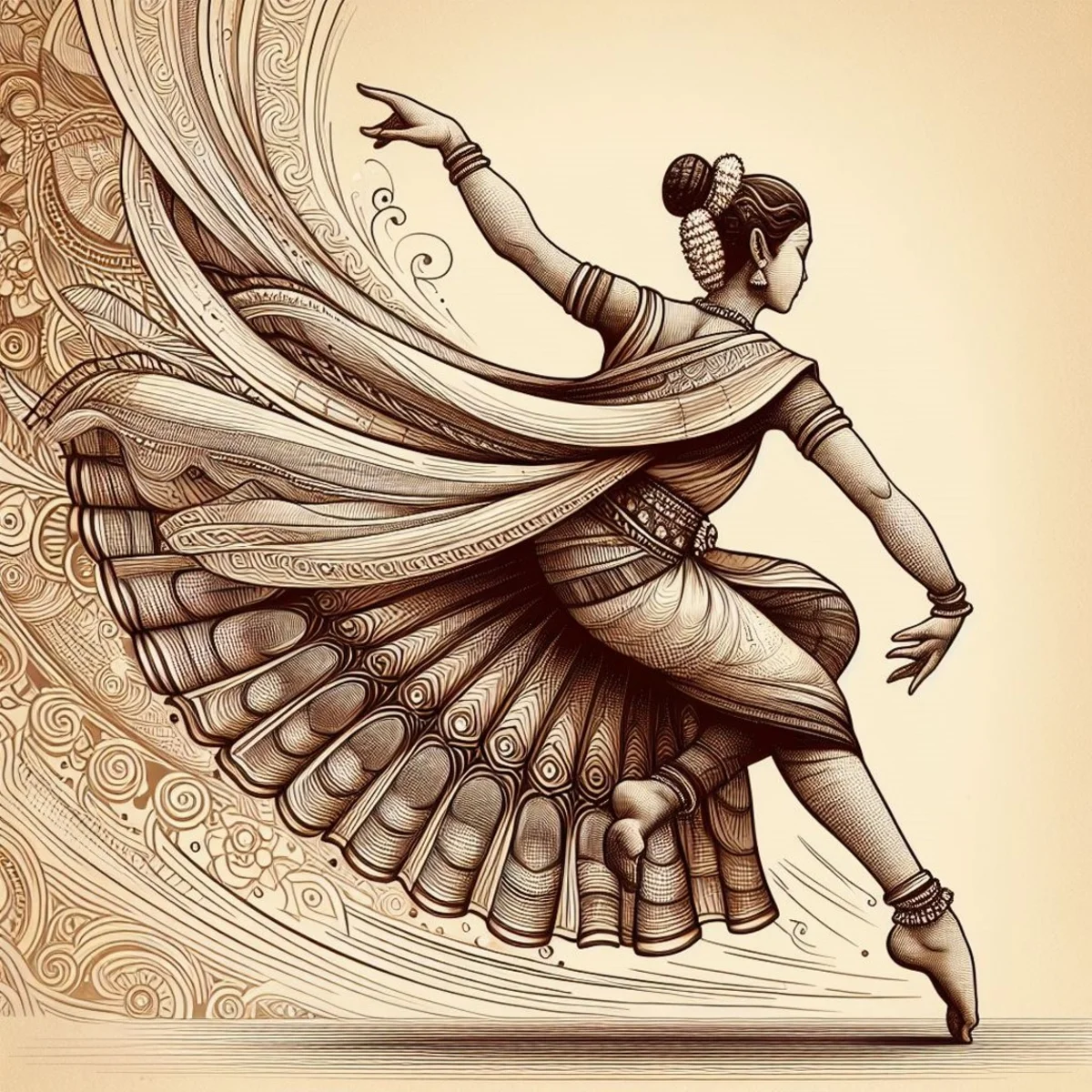
Recaka (रेचक) translates to “moving a limb round” or “particular movement of the feet.” It encompasses the independent movement of limbs, separate from any codified dance sequence or pose (Karaṇa or Cārī).
These movements can be as diverse as quivering, swaying, or whirling, adding a layer of dynamism and ornamentation to the dancer’s performance.
चतुरो रेचकांश्चापि गदतो मे निबोधत ।
पादरेचक एकः स्यात् द्वितीयः कटिरेचकः ॥ २४८॥

Caturo recakāṁścāpi gadato me nibodhata।
Pādarecaka ekaḥ syāt dvitīyaḥ kaṭirecakaḥ॥ 248॥

Meaning:

The verse explains that there are four specific movements of extension. Brahma says, now listen carefully to the description of these movements. The first movement mentioned involves the extension of the leg, and the second involves the extension of the waist.

We are here, follow us.
कररेचकस्तृतीयस्तु चतुर्थः कण्ठरेचकः ।
[रेचिताख्यः पृथग्भावे वलने चाभिधीयते ॥

Kararecakastṛtīyastu caturthaḥ kaṇṭharecakaḥ।
Recitākhyaḥ pṛthagbhāve valane cābhidhīyate॥

Meaning:

Brahma continues the description of the movements. He states that the third type of extension involves the arm, and the fourth involves the neck. These movements, in their distinct forms and during the act of bending, are collectively known as Rechita.


Get featured on this blog?
Submit your videos and images of you performing Recakas!
We’d love to showcase your talent and passion for classical dance with the world.
उद्वाहनात्पृथग्भावाच्चलनाच्चापि रेचकः ।
पार्श्वात्पार्श्वे तु गमनं स्खलितैश्चलितैः पदैः ॥

Udvāhanātpṛthagbhāvāccalanāccāpi recakaḥ।
Pārśvāt pārśve tu gamanaṁ skhalitaiś calitaiḥ padaiḥ॥

Meaning:

Here, the verse describes the concept of "Rechaka," which involves actions of lifting, separating, and moving. Additionally, it explains that lateral movements (from side to side) involve steps that can include stumbling.

Types of Recaka
Time needed: 5 minutes
Recaka is further categorized based on the specific limb being accentuated:
- Pada-recaka (Foot Recaka):
This involves delicate footwork, with the feet moving sideways, wavering, or taking on independent movements.
- Kați-recaka (Waist Recaka):
This focuses on the torso, involving subtle movements like raising the hips (Trika), twisting the waist, or drawing it back.
- Hasta-recaka (Hand Recaka):
Here, the focus shifts to the hands. The dancer utilizes movements like raising, extending, turning, and drawing the hands back to create visual intrigue.
- Grīvā-recaka (Neck Recaka):
This subtle movement involves raising, lowering, and tilting the neck, adding another dimension of expression to the performance.
विविधैश्चैव पादस्य पादरेचक उच्यते ।
त्रिकस्योद्वर्तनं चैव छटीवलनमेव च ॥

Vividhaiścaiva pādasya pādarecaka ucyate।
Trikasyodvartanaṁ caiva chaṭīvalanameva ca॥

Meaning:

The foot movements, including those of the toe, involve various actions such as lifting and tapping.

तथाऽपसर्पणं चैव कटिरेचक उच्यते ।
उद्वर्तनं परिक्षेपो विक्षेपः परिवर्तनम् ॥

Tathā'pasarpaṇaṁ caiva kaṭirecaka ucyate।
Udvartanaṁ parikṣepo vikṣepaḥ parivartanam॥

Meaning:

The hip movements involve actions such as sliding, raising, throwing, tossing, and turning.

विसर्पणं च हस्तस्य हस्तरेचक उच्यते ।
उद्वाहनं सन्नमनं तथा पार्श्वस्य सन्नतिः ॥

Visarpaṇaṁ ca hastasya hastarecaka ucyate।
Udvāhanaṁ sannamanaṁ tathā pārśvasya sannatiḥ॥

Meaning:

The hand movements involve actions such as spreading out or extending, while movements of the side include lifting, bending, and inclining.

भ्रमणं चापि विज्ञेयो ग्रीवाया रेचको बुधैः । ]
रेचकैरङ्गहारैश्च नृत्यन्तं वीक्ष्य शङ्करम् ॥ २४९॥

Bhramaṇaṁ cāpi vijñeyo grīvāyā rechako budhaiḥ।
Reckair aṅgahāraiśca nṛtyantaṁ vīkṣya śaṅkaram॥ 249॥

Meaning:

The stretching or extending movements of the neck, along with body movements, are to be understood, and after observing them, one should watch Lord Shiva dance.

Recaka and Gamaka: A Parallel Universe
Dr. Padma Subrahmanyam draws a beautiful parallel between Recaka in dance and Gamaka in Carnatic music. Gamakas are the embellishments that bring life to a melody. Similarly, Recakas are the ornaments that enhance the beauty and expressiveness of dance movements.
Dr. Padma Subrahmanyam’s Quotes:
- “Recakas in dance are ornaments that enhance the beauty of movement. They can be compared to the ‘vachika abhinaya’ (expressive hand gestures) mentioned in Natya Shastra and the ‘gamakas’ of the Natya Shastra music tradition.”
- “Svara sthana are like the skeletal frame. Upon this foundation, a beautiful physique filled with flesh and blood needs to be built.”
- “Recakas are the gamakas of dance.”
- “In the Indian Upanishadic tradition, the body is compared to a veena (string instrument). Just as subtle shrutis (microtones) are produced on the veena, similar subtle recakas can be created in our bodies. This can be called visual music.”
- “I see the song, I hear the dance.”
Examples of Recakas:
- Padma Subrahmanyam demonstrated through practical examples how nritta sthana (dance postures) become recakas in dance, expressing the subtle shrutis between the sthayi swaras (stable notes) of Dhaivat (fifth note), Pancham (fifth note), and Madhyama (fourth note) in the Todà raga (melody).
- Inspired by the ‘Sukhalasa’ mentioned as a lasya anga (graceful body movement) in medieval India, Padma Subrahmanyam composed a dance presentation called ‘Sukhalasyam’.
Articles for you about NatyaShastra
- NatyaShastra: The Ancient Blueprint Of Storytelling
- Bharata Muni and the Sages Discuss the Soul of Natyashastra
- Three Definitions Of Natya (Drama)
- The Birth Of NatyaVeda
- Who Was Bharata Muni And His 100 Sons?
- The Birth of the Apsaras for the Kaishiki Style
- The Origins of Indian Theatre as per NatyaShastra
Share the article
Frequently Asked Questions on Recaka
Recaka adds depth and nuance to a dancer’s performance. It allows for a more nuanced portrayal of emotions and enhances the visual representation of the music.
Padma Subrahmanyam envisioned Recaka as a visual representation of the microtones (Sruthi) present in Indian music. Skilled dancers can even align their Recakas with the subtle variations within a Raga (melody).
Recaka complements established elements like Nritta Sthana (dance postures) and Angahara (gestural movements). It adds a layer of detail and ornamentation, similar to how Gamakas enhance a musical composition.
Padma Subrahmanyam is credited with exploring and establishing the concept of Recaka and clarifying the connection between dance and music. This concept has enriched the understanding and appreciation of Indian classical dance.
By observing performances by accomplished dancers and delving into the works of Padma Subrahmanyam, one can gain a deeper understanding of Recaka and its role in Indian classical dance.
Conclusion
Recaka, a nuanced concept explored by Dr. Padma Subrahmanyam, infuses Indian classical dance with a captivating layer of detail.
It acts as the artistic flourish, akin to musical embellishments, breathing life and depth into the dancer’s movements.
By delving into Recaka’s various forms and its connection to music, we gain a richer appreciation of this captivating art form.
So, the next time you witness or practice a classical Indian dance performance, pay close attention to the subtle movements, the artistry that transcends codified steps.
You will experience the magic of Recakas unfold.
About Natya-Shastra.in
At Natya-Shastra.in, our mission is to serve as a gateway to the illustrious world of the NāṭyaŚāstra, offering insights, resources, and a platform to delve deeper into the nuances of Indian performing arts. We aim to bring forth the richness of this ancient text, shedding light on the profound wisdom it holds and its everlasting influence on various artistic traditions.
We are here, follow us.
Disclaimer:
Affiliate Links: Some links may earn us a commission (at no cost to you). We only recommend helpful products.
NatyaShastra Glossary: Head over to the Natyashastra Glossary page to know the meaning behind Sanskrit terms used in the articles.
Images & Videos: Representational only, not exact depictions.
Knowledge Source & References: Inspired by ancient Natyashastra scriptures, open to interpretation.
Disclaimer: Educational only, not professional advice. Consult a qualified expert for specific needs.
Offer Your Expertise