Estimated reading time: 9 minutes
Abhinaya is the soul of Indian classical dance. It is the expressive technique that conveys stories, emotions, and ideas through a blend of facial expressions, gestures, and movements. While many associate Indian dance with intricate footwork and rhythmic patterns, the art of Abhinaya introduces a layer of emotional depth that resonates with the audience. This guide dives into the four-fold technique of Abhinaya, offering more insights and depth than ever before.

Take the free NatyaShastra Course Online.
What is Abhinaya in Natyashastra?
Abhinaya is a special way of acting and expressing feelings through dance and movement. Think of it like this math equation:
अभि (abhi) + णि (ni) = अभिनय (abhinaya) = पदार्थान् (meanings) + नानार्थान् (diverse interpretations)

It’s like telling a story without words – using your face, hands, and body to show what you mean. When dancers perform, they use both big movements (like arms and legs) and small movements (like eyes and fingers). This is to help the audience feel and understand the story. Just as we point to show direction or use our faces to show if we’re happy or sad, dancers use abhinaya to share stories and feelings.
At its core, Abhinaya is the method through which dancers convey Rasa—the emotional essence that engages the audience. According to Bharata’s Natyashastra, Rasa emerges when the audience experiences a harmonious blend of Vibhava (causes), Anubhava (effects), and Vyabhichari Bhavas (transient emotions).


आङ्गिकौ वाचिकश्चैव ह्याहार्यः सात्विकस्तथा ।
चत्वारोऽभिनया ह्येते विज्ञेया नाट्यसंश्रयाः ॥ २३॥

āṅgikau vācikaścaiva hyāhāryaḥ sātvikastathā |
catvāro'bhinayā hyete vijñeyā nāṭyasaṃśrayāḥ || 23||

Meaning:

The four types of acting are: bodily (Āṅgika), verbal (Vācika), costume and makeup (Āhārya), and emotional (Sāttvika). These are to be understood as integral to drama.
We are here, follow us.
The Four Types of Abhinaya
The Natyashastra and Abhinayadarpana classifies Abhinaya into four distinct types. These categories allow dancers to convey emotions and stories in a multi-dimensional way, engaging the viewer on various levels.

1. Angika Abhinaya (Physical Expression)
Angika Abhinaya involves the use of the body — from the eyes to the tips of the fingers — to communicate emotion. Dancers utilize hand gestures (mudras), facial expressions (mukhabhinaya), and body movements to express various emotions, concepts, and ideas.
तत्र आङ्गिकोऽङ्गैर्निदर्शितः ।

tatra āṅgiko'ṅgairnidarśitaḥ |

Meaning:

Āṅgika Abhinaya is demonstrated through the limbs (gestures).
- Key Components: Hand gestures, body postures, and facial expressions
- Examples: A dancer might use a hand gesture to symbolize a bird while using a head tilt to show curiosity.
2. Vachika Abhinaya (Verbal Expression)
Vachika Abhinaya encompasses the verbal aspects of a performance. This could include spoken dialogue, songs, or even chants. In some classical forms like Kuchipudi, dancers themselves may speak or sing, but in Bharatanatyam, it’s often the accompanying vocalist who brings Vachika Abhinaya to life.
वाचा विरचितः काव्यनाटकादि तु वाचिकः ॥ ३९॥

vācā viracitaḥ kāvyanāṭakādi tu vācikaḥ || 39||

Meaning:

Vācika Abhinaya is expressed through words, such as in poetry, drama, etc.
- Key Components: Lyrics, chants, dialogue
- Examples: The way a dancer synchronizes their movements with the rhythm and lyrics of the song being sung adds layers to the performance.

3. Aharya Abhinaya (Costume and Makeup)
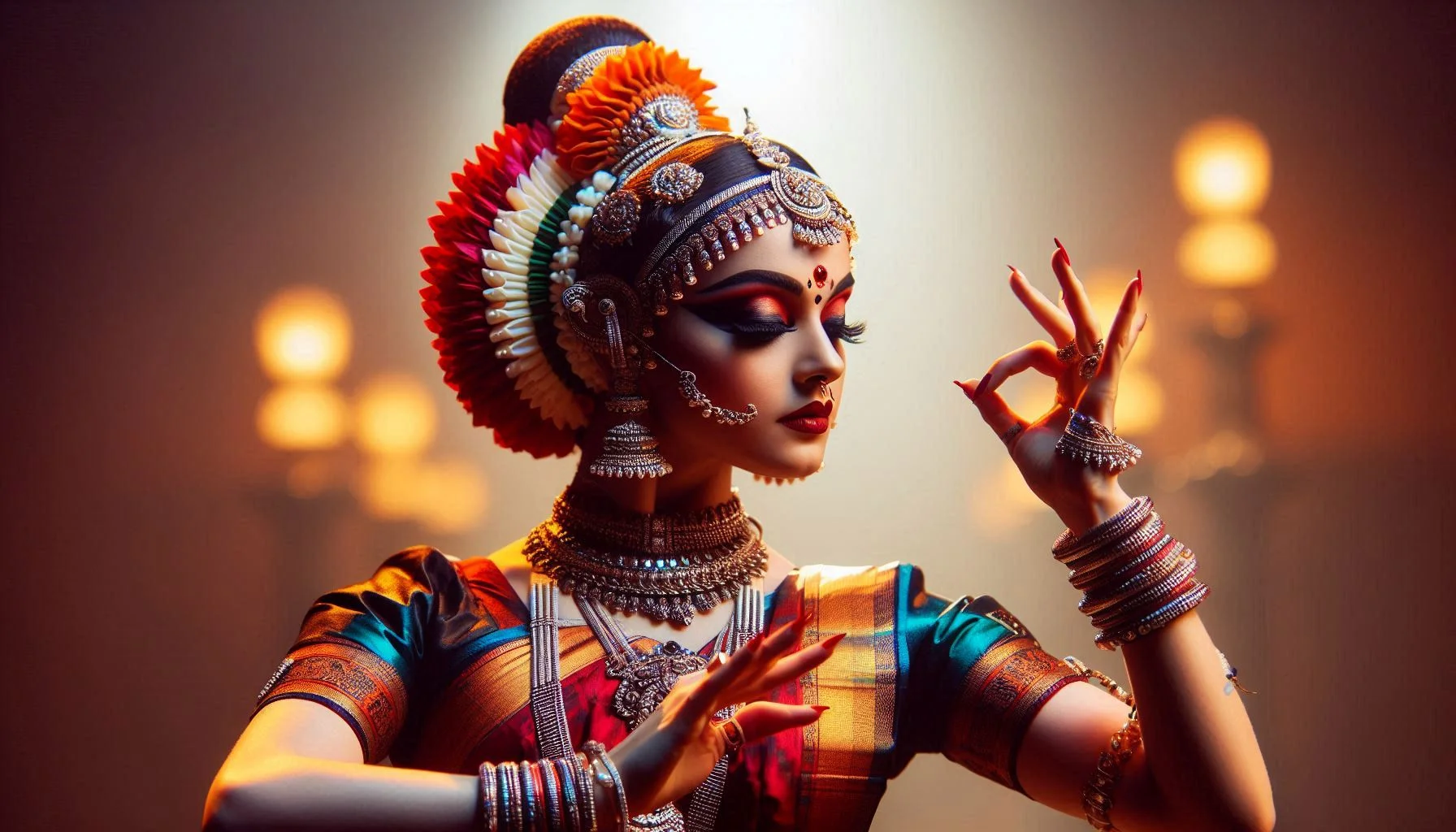
Aharya Abhinaya focuses on the dancer’s appearance, which is integral to conveying a character or emotion. Costumes, makeup, and jewelry all serve to transform the dancer into a mythological figure, a king, a villager, or a deity.
आहार्यो हारकेयूरवेषादिभिरलङ्कृतः ।

āhāryo hārakeyūraveṣādibhiralaṅkṛtaḥ |

Meaning:

Āhārya Abhinaya is adorned with jewelry, costumes, and decorations.
- Key Components: Costume, makeup, jewelry
- Examples: A dancer portraying Shiva might wear a crescent moon-shaped ornament, while dramatic eye makeup enhances the intensity of expressions.
4. Satvika Abhinaya (Emotional Expression)
The most nuanced form of Abhinaya, Satvika Abhinaya, refers to the genuine emotions that arise from within the performer. This is where the dancer transcends physicality and enters the realm of pure emotion, using trembling, sweating, or other physical manifestations to portray inner feelings.
सात्त्विकः सात्त्विकैर्भावैर्भावज्ञेन विभावितः ॥ ४०॥

sāttvikaḥ sāttvikairbhāvairbhāvajñena vibhāvitaḥ || 40||

Meaning:

Sāttvika Abhinaya is realized through emotional states, understood by the expert in expressions.
- Key Components: Tears, goosebumps, trembling, facial pallor
- Examples: A portrayal of extreme sorrow may involve subtle facial quivers and tears to depict the intensity of grief.
- Anubhavas: The eight recognized reactions of Sāttvika Abhinaya include physical signs like immobility, sweating, shivering, and fainting, which help convey deep emotional states.


Get featured on this blog?
Submit your videos and images of you performing classical dance!
We’d love to showcase your talent and passion for classical dance with the world.
Why is Abhinaya Important?
Abhinaya is crucial because it transforms a dance performance from a mere physical display into an emotionally charged narrative. Without Abhinaya, dance would lack the depth and connection that resonates with the audience. It’s through Abhinaya that dancers convey the subtle emotions, mythology, and stories intrinsic to Indian classical dance, making the performance a meaningful experience for the viewer.

तत्र त्वभिनयस्यैव प्राधान्यमिति कथ्यते ।

आङ्गिको वाचिकस्तद्वदाहार्यः सात्विकोऽपरः ॥ ३८॥

tatra tvabhinayasyaiva prādhānyamiti kathyate |

āṅgiko vācikastadvadāhāryaḥ sātviko'paraḥ || 38||

Meaning:

Of all the performance elements mentioned in Natyashastra and Abhinayadarpana, Abhinaya (acting or expression) holds the highest importance in dramatic arts. It reiterates the 4 folds of Abhinaya - bodily gestures, speech, costumes and props, and emotions.
The Study of Abhinaya
The study is both academic and practical. It involves learning the specific gestures, postures, and expressions that are prescribed in texts like the Natyashastra and Abhinayadarpana. More importantly, it requires dancers to practice embodying different emotions, often through rigorous training. This practice is essential for dancers to internalize the language of expressions and convey it authentically on stage.
What is the Difference Between Natya and Abhinaya?
Natya refers to the dramatic representation of stories, which encompasses dance, music, and dialogue, while Abhinaya specifically refers to the expressive techniques used to convey emotions and stories. In short, Natya is the art of acting or performance, and this is the technique or tool that makes that performance meaningful and emotionally resonant.
What is the Origin of Abhinaya?
Abhinaya has its roots in ancient Indian performance arts, particularly in the treatises like Natyashastra and Abhinayadarpana. This art was developed to be a holistic tool for dancers and actors to communicate complex emotions and narratives to their audience, bridging the gap between performer and viewer.
Advanced Techniques in Abhinaya
- Drishti Bhedas (Eye Movements): The eyes are central to Abhinaya. Advanced practitioners use various eye movements (like side glances or rapid flicks) to add subtle layers of meaning to a performance.
- Navarasa (Nine Emotions): The mastery of Abhinaya involves being able to switch between the nine primary emotions or Rasas — including love (Shringara), anger (Raudra), and fear (Bhayānaka).
Actionable Tips for Dancers
- Practice in front of a mirror: To perfect Angika Abhinaya, practicing in front of a mirror helps dancers become more aware of subtle body movements and expressions.
- Immerse yourself in the character: For Satvika Abhinaya, it’s crucial to mentally and emotionally immerse oneself in the role. This requires not just rehearsals but also meditation or visualization techniques to embody the character fully.
- Experiment with Vachika: Even if you’re not singing or speaking during a performance, practice syncing your movements to the accompanying lyrics or chants. This will enhance your connection with the story.
Articles for you about NatyaShastra
- NatyaShastra: The Ancient Blueprint Of Storytelling
- Bharata Muni and the Sages Discuss the Soul of Natyashastra
- Three Definitions Of Natya (Drama)
- The Birth Of NatyaVeda
- Who Was Bharata Muni And His 100 Sons?
- The Birth of the Apsaras for the Kaishiki Style
- The Origins of Indian Theatre as per NatyaShastra
- Two Kinds of Preliminaries in Classical Indian Dance
- Recaka in Indian Classical Dance: Nuances of Movement
- Pindibandha: India’s Ancient Group Dance Technique As Explained In Natyashastra
- Angaharas: The Building Blocks of Indian Classical Dance
- Samyuta Hastas: 24 Double Hand Gestures as per Shastras
- Asamyuta Hastas: 28 Single Hand Gestures as per Shastras
Share the article
Frequently Asked Questions About Abhinaya
Yes, Abhinaya is integral to most classical dance forms like Bharatanatyam, Kathakali, and Odissi. While the emphasis may vary, it’s the expressive element that breathes life into the technical choreography.
Satvika Abhinaya is often considered the most challenging as it requires internalizing the emotions being portrayed. Beginners can start by focusing on physical expressions and gradually work toward embodying the emotional depth required for Satvika.
In contemporary settings, dancers sometimes experiment with minimalist costumes and makeup. However, traditional Aharya Abhinaya, with its grandeur and symbolism, remains popular for mythological or historical performances.
Conclusion
Abhinaya is the heart of Indian classical dance, bringing depth and meaning to every movement, gesture, and expression.
The four-fold acting technique—Angika, Vachika, Aharya, and Satvika—enables dancers to transcend physical choreography and immerse their audience in a rich emotional and narrative experience.
Whether you’re a beginner just stepping into the world of classical dance or a seasoned performer, mastering this expressive art is key to connecting deeply with both the story and the audience.
As dance continues to evolve, this art remains timeless, bridging the ancient techniques of the Natyashastra and Abhinayadarpana with modern interpretations, ensuring the essence of storytelling through movement stays alive and thriving.
About Natya-Shastra.in
At Natya-Shastra.in, our mission is to serve as a gateway to the illustrious world of the NāṭyaŚāstra, offering insights, resources, and a platform to delve deeper into the nuances of Indian performing arts. We aim to bring forth the richness of this ancient text, shedding light on the profound wisdom it holds and its everlasting influence on various artistic traditions.
We are here, follow us.
Disclaimer:
Affiliate Links: Some links may earn us a commission (at no cost to you). We only recommend helpful products.
NatyaShastra Glossary: Head over to the Natyashastra Glossary page to know the meaning behind Sanskrit terms used in the articles.
Images & Videos: Representational only, not exact depictions.
Knowledge Source & References: Inspired by ancient Natyashastra scriptures, open to interpretation.
Disclaimer: Educational only, not professional advice. Consult a qualified expert for specific needs.
Offer Your Expertise