Estimated reading time: 7 minutes
Beneath the emerald canopy of an ancient forest, a hush fell upon the gathered sages. Their furrowed brows and expectant gazes met the serene countenance of Bharata Muni. It was as if awaiting a truth whispered on the wind.
With a voice echoing the rustle of leaves, Bharata began his tale. A tale of a divine encounter, of celestial visions, and the birth of an art form. Destined to captivate ages to come.
It was Lord Brahma himself, Bharata revealed, who had bestowed upon him the gift of Nāṭyaśāstra.
Vivid descriptions painted a picture of his audience with the divine. They were of receiving the very essence of music, dance, and drama woven into celestial threads. But his narrative was just the beginning.
The sages, their curiosity piqued, fired a volley of questions.
This blog delves into the heart of these very questions.
So, let us understand the vert questions whispered by the sages to Bharata Muni.
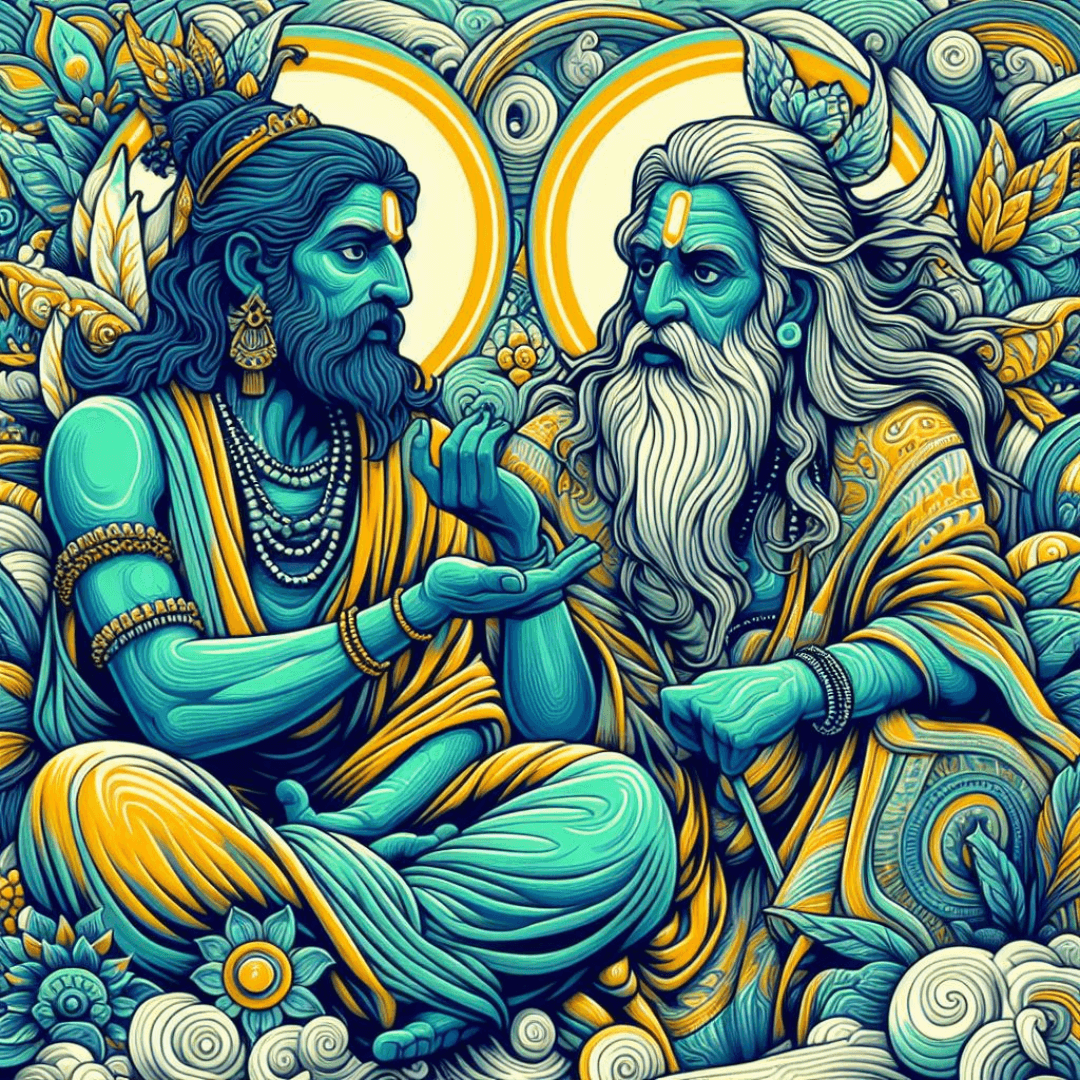
The Sages and the Bharata Muni engage in conversation.
BHARATA MUNI (smiling gently): Peace be upon you, esteemed sages. These woods have missed your counsel.
Bharata’s 100 sons accompany him.
SAGE ATREYA: Bharata Muni, your return brings light to our gathering brighter than the midday sun. Tell us, where have your steps led you?
BHARATA MUNI (sits cross-legged): To a realm beyond our earthly realm, sages. To the celestial abode of Lord Brahma himself.
A murmur of surprise ripples through the sages. Their eyes widen, anticipation hanging heavy in the air.
SAGE 1: Lord Brahma? Did he grant you an audience?
BHARATA MUNI: Indeed, he did. And what an audience it was! Words fail to capture the brilliance of his form, the wisdom that resonated from his every word.
SAGE 2: And what transpired, Bharata Muni? Did he bestow upon you a divine blessing?
BHARATA MUNI (a knowing smile graces his lips): He did, munivar (sage). A blessing not meant for me alone but for all of humanity. He gifted me with the knowledge of Natya Shastra.
SAGES (in unison, shocked): Natya Shastra?
Atreya and other sages mutter among themselves and look at Bharata Muni.
SAGE ATREYA (eyes shining with excitement): Can you share a glimpse of this knowledge with us, Bharata Muni? Our hearts thirst to learn the secrets bestowed upon you.
BHARATA MUNI (chuckles) Patience, Atreya. The ocean is vast, and we have much to explore. Gather closer, and let me whisper the secrets of Natya Shastra.
Sages start questioning about NatyaShastra.
We are here, follow us.
Question 1:
How was the Natya veda born, O Brahma, and for what purpose?
The sages here seek enlightenment as they inquire about the birth of the Natya veda and its divine purpose. Brahma spills the mystical origins and profound intent behind the Nāṭya Veda, satisfying their curiosity and presenting its sacred mysteries.

योऽयं भगवता सम्यग्ग्रथितो वेदसम्मितः ।
नाट्यवेदं कथं ब्रह्मन्नुत्पन्नः कस्य वा कृते ॥ ४॥

Yo'yaṁ bhagavatā samyaggrathito vedasammitaḥ।
Nāṭyavedaṁ kathaṁ brahmannutpannaḥ kasya vā kṛte॥ 4॥

Meaning:

The verse questions how this composition, correctly composed and endorsed by the divine, the Veda of drama, could have originated from Brahman and for what reason.

न वेदव्यवहारोऽयं संश्राव्यः शूद्रजातिषु ।
तस्मात्सृजापरं वेदं पञ्चमं सार्ववर्णिकम् ॥ १२॥

Na vedavyavahāro'yaṁ saṁśrāvyaḥ śūdrajātiṣu।
Tasmātsṛjāparaṁ vedaṁ pañcamaṁ sārvavarṇikam॥ 12॥

Meaning:

The dealing with the 4 Vedas is not fit to be heard among all; therefore, another Veda, the fifth one, is created, which applies to all beings.

एवं सङ्कल्प्य भगवान् सर्ववेदाननुस्मरन् ।
नाट्यवेदं ततश्चक्रे चतुर्वेदाङ्गसम्भवम् ॥ १६॥

Evam saṅkalpya bhagavān sarvavedānusmaran।
Nāṭyavedaṁ tataścakre caturvedāṅgasambhavam॥ 16॥

Meaning:

Here, the verse describes how the divine, having resolved, remembered all the Vedas and then created the Nāṭya Veda (Veda of drama), leading to the origin of the four Vedāṅgas.
Question 2:
Please explain the details and principles of the Natyaveda.
The sages eagerly request a comprehensive explanation from Bharata Muni on the intricate depths of the NāṭyaVeda. With profound clarity and rich insight, Bharata Muni elucidates foundational principles and detailed exposition of this ancient art form.

कत्यङ्गः किंप्रमाणश्च प्रयोगश्चास्य कीदृशः ।
सर्वमेतद्यथातत्त्वं भगवन्वक्तुमर्हसि ॥ ५॥

Katyangaḥ kiṁ pramāṇaśca prayogaścāsya kīdṛśaḥ।
Sarvametadyathātattvaṁ bhagavanvaktumarhasi॥ 5॥

Meaning:

Here, the sages ask Bharata to explain how many parts, what measurement, and what kind of application constitute the essence of NatyaShastra.

जग्राह पाठ्यमृग्वेदात्सामभ्यो गीतमेव च ।
यजुर्वेदादभिनयान् रसानाथर्वणादपि ॥ १७॥

Jagrāha pāṭhyamṛgvedātsāmabhyo gītameva ca।
Yajurvedādabhinayān rasānātharvaṇādapi॥ 17॥

Meaning:

The verse describes the acquisition of various arts from different Vedas, such as Rigveda (recitable), Saṁaveda (song), Yajurveda (expressive gestures), and even Atharvaveda (the science of emotion).
Question 3:
How does one navigate the labyrinth of emotions and translate them into a captivating performance?
Exploring the art of gracefully navigating emotions and translating them into captivating performances, the sages seek wisdom. Bharata Muni imparts insightful guidance to the intricate process of emotional translation.

मुनयः पर्युपास्यैनमात्रेयप्रमुखाः पुरा ।
पप्रच्छुस्ते महात्मानो नियतेन्द्रियबुद्धयः ॥ ३॥

Munayaḥ paryupāsyainamātreyapramukhāḥ purā।
Papracchuste mahātmāno niyatendriyabuddhayaḥ॥ 3॥

Meaning:

The verse describes how sages, led by Atreya and other great souls, worshiped Bharata and inquired from him with disciplined senses and intellect.
Question 4:
What happens within them as they witness this emotional alchemy?
As the sages delve deeper into their inquiry, they seek to understand the profound inner journey and the transformative impact of witnessing emotional alchemy.
Bharata Muni sheds light on these experiences, revealing the profound inner dynamics that unfold within them.
Question 5:
Will NatyaShastra continue to resonate with generations to come?
The enduring legacy of NatyaShastra reflects as the sages and Bharata Muni contemplate its resonance with future generations.

सर्वशात्रार्थसम्पन्नं सर्वशिल्पप्रवर्तकम् ।
नाट्याख्यं पञ्चमं वेदं सेतिहासं करोम्यहम् ॥ १५॥

Sarvashāstrārthasampannam sarvashilpapravartakam।
Nāṭyākhyaṁ pañchamaṁ vedaṁ setihāsaṁ karomyaham॥ 15॥

Meaning:

The verse declares the creation of a fifth Veda called Nāṭya (drama), with the knowledge of all sciences, serves as an initiator of all arts and crafts. It is considered a form of history.
Across NatyaShastra, the sages ask various other questions to gain a deep understanding of the 5th Veda.
The questions revolve around,
- Structure of a Play
- Genres of Acting
- Rasa Theory
- Body Language and Gestures
- Music and Dance
- Stagecraft and Costumes
- Ethical Considerations
- Spiritual Significance
Subscribe to us for free as we explore the entirety of Natyashastra.
Share the article
Frequently Asked Questions
The theme of Natyashastra revolves around emotional exploration and their expression through various forms of performing arts.
This sanskrit work of art emphasizes storytelling, music, and dance, providing a comprehensive guide for performers to create captivating performances.
NatyaShastra emphasizes storytelling and emotional expression through music, dance, and theater. It aims to evoke a range of emotions in the audience, requiring years of training and dedication.
Many centuries ago, when the sages, driven by their thirst for knowledge and understanding, questioned Bharata Muni about the intricate workings of Natya Shastra.
Their inquiry sought to unravel the secrets of emotional translation and explore the transformative impact of witnessing emotional alchemy.
As they embarked on this intellectual journey, they discovered the profound inner dynamics that unfolded within them.
Natyashastra is an extensive text comprising approximately 6,000 slokas. These slokas delve into various aspects of performance, revealing the intricacies and nuances of storytelling, music, dance, stagecraft, and more.
Each sloka adds a layer of wisdom and knowledge to the collective understanding of the performing arts. Within these verses, we try to understand the secrets of emotional expression and the impact it can have on both performers and audiences alike.
Conclusion
Natya Shastra is a treatise on the performing arts and a profound exploration of human emotions and their expression.
The conversation between the sages and Bharata Muni sheds light on the purpose, principles, and transformative power of Natyaveda.
It guides performers to navigate the labyrinth of emotions and create captivating performances that resonate with the audience.
Natya Shastra’s soul lies in its ability to connect generations through its timeless principles and universal themes.
As we delve deeper into its teachings, we understand ourselves and the human experience.
So, let us study, practice, and preserve this ancient art form.
About Natya-Shastra.in
At Natya-Shastra.in, our mission is to serve as a gateway to the illustrious world of the Natyashastra. We offer insights, resources, and a platform to delve deeper into the nuances of Indian performing arts.
Also, we aim to bring forth the richness of this ancient text. We try to shed light on the profound wisdom it holds and its everlasting influence on various artistic traditions.
We are here, follow us.
Disclaimer:
Affiliate Links: Some links earn us a commission (at no cost to you). We only recommend helpful products.
NatyaShastra Glossary: Head over to the Natyashastra Glossary page to know the meaning behind Sanskrit terms used in the articles.
Images & Videos: Representational only, not exact depictions.
Knowledge Source & References: Inspired by ancient Natyashastra scriptures, open to interpretation.
Offer Your Expertise