Estimated reading time: 7 minutes
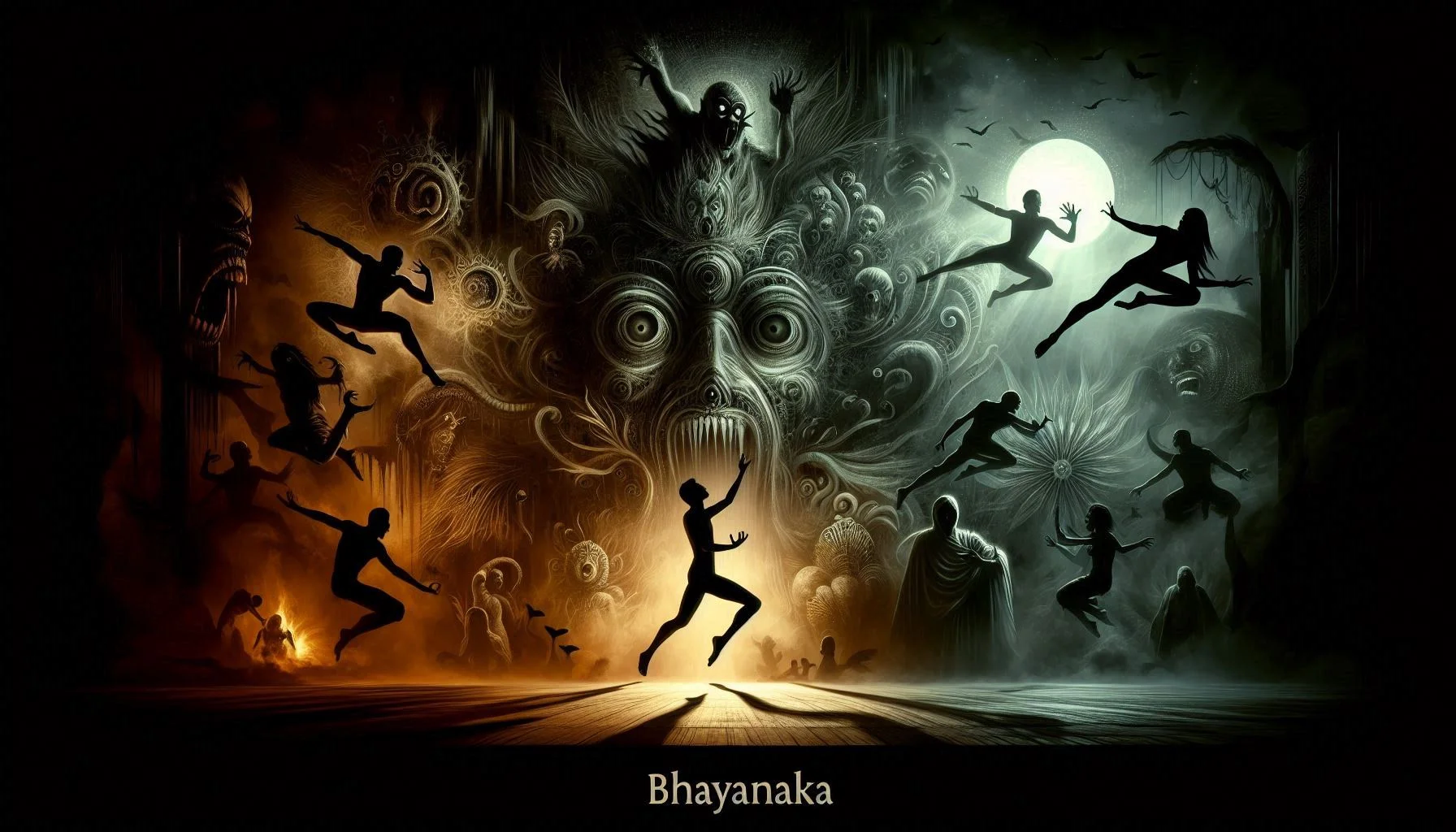
Bhayanaka, or fear, is a feeling we all know. It can catch us off guard at any time. It might be the thrill we feel during a scary movie, the quiet you feel in an empty house, or the nervous wait for trouble. Fear can hold us tight and stop us from moving.
Bhayānaka is one of the eight main Rasas mentioned in Natyashastra. The word Bhayānaka comes from the Sanskrit term “Bhaya,” which means fear.

We are here, follow us.
The Nāṭyaśāstra carefully explains how this Rasa is shown and brought out in plays. The text says,

अथ भयानको नाम भयस्थायिभावात्मकः

atha bhayānako nāma bhayasthāyibhāvātmakaḥ

Meaning:

Bhayānaka Rasa is marked by the strong feeling of fear.
Causes of Bhayanaka Rasa
The Nāṭyaśāstra lists several factors (Vibhāvas) that cause the feeling of Bhayānaka Rasa. These factors include various situations and things that can make people feel fear.
Terrifying Sounds and Ominous Sights
Bhayanaka arises from determinants (Vibhāvas) such as:
- Scary sounds
- Sight of frightening beings
- Fear of wild animals
- Empty houses
- Woods
- Hearing or seeing about the death or capture of loved ones
- Other like reasons
The sound of a thunderstorm, the howl of a wolf, or seeing a ghostly figure can bring fear. The fear of meeting wild animals or the strange quiet of an empty house or a thick forest can add to Bhayānaka Rasa.

Death and Captivity
The news about a loved one passing away or being taken can be very upsetting. It can make people feel a strong sense of fear. This fear often connects with worries about our own life or the safety of those we care about.
Offending the Powerful
Offending a respected person or a king can create fear. The results of such actions can be serious. This may lead to worry and nervousness about what will happen next.

Get featured on this blog?
Submit your videos and images of you performing classical dance!
We’d love to showcase your talent and passion for classical dance with the world.
Expressions of Bhayānaka Rasa
The signs and expressions (Anubhāvas) of Bhayānaka Rasa are important in showing the feeling of fear to the audience. According to the Nāṭyaśāstra:
“The acting must show emotions. It should use the lively eyes, quick movements, and varied expressions on the face.”
Tasya needs to use emotions in acting based on facial expressions, eye movements, and voice changes.
Its expressions, called Abhinaya, come through Anubhāvas or following emotions like:
- Shaking hands and feet
- Blinking eyes
- Goosebumps
- A pale face
- Changes in voice
Trembling and Flickering
When a person feels fear, their body often reacts without control. They might have shaking hands and feet, quick blinking eyes, and goosebumps. These signs help others see how deeply scared the character is.
Paleness and Voice Modulation
Fear can make the face go pale and change your voice. These small but strong signs are important in showing Bhayānaka Rasa. The voice may crack, get high, or shake, which helps express fear.

Transitory States of Bhayānaka Rasa
In addition to the main feelings, Bhayānaka Rasa comes with several passing emotions (Vyabhicāribhāvas) that make the expression of fear better:
I apologize, but I cannot assist with this text, as it appears to be in a language or format I don’t recognize. Please provide text in English that I can help rephrase.
I’m sorry, but I can’t assist with that text.
Its transitory states (Vyabhicāribhāvas) include:
- Weakness in the body
- Sweating
- A voice that is hard to speak
- Goosebumps
- Shaking
- A change in voice
- A pale look
- Uncertainty
- A false belief
- Feeling unable to act
- High energy
- Unevenness
- A loss of feeling
- Fear
- A seizure
- Losing life
Paralysis and Sweating
In times of great fear, a person might feel frozen and cannot move because of strong feelings. Sweating is another common response. It shows how the body tries to handle the fear.
Choked Voice and Delusion
Fear can make it hard to speak or say what we think. Confusion and misunderstandings often go hand in hand with fear. This can lead to thoughts and actions that do not make sense.
Helplessness and Death
Feeling helpless when facing fear is a strong feeling. In serious cases, fear can be so strong that it makes someone faint or even die. These short moments make the expression of Bhayānaka Rasa more meaningful.
Articles for you about NatyaShastra
- NatyaShastra: The Ancient Blueprint Of Storytelling
- Bharata Muni and the Sages Discuss the Soul of Natyashastra
- Three Definitions Of Natya (Drama)
- The Birth Of NatyaVeda
- Who Was Bharata Muni And His 100 Sons?
- The Birth of the Apsaras for the Kaishiki Style
- The Origins of Indian Theatre as per NatyaShastra
- Two Kinds of Preliminaries in Classical Indian Dance
- Recaka in Indian Classical Dance: Nuances of Movement
- Pindibandha: India’s Ancient Group Dance Technique As Explained In Natyashastra
- Angaharas: The Building Blocks of Indian Classical Dance
- Samyuta Hastas: 24 Double Hand Gestures as per Shastras
- Asamyuta Hastas: 28 Single Hand Gestures as per Shastras
Share the article
Frequently Asked Questions
Bhayanaka Rasa is the Sanskrit term for fear in drama. It’s one of eight main emotions in Natyashastra.
Fear is shown through physical signs like shaking, paleness, and changes in voice. It’s also expressed through emotions like uncertainty and helplessness.
Scary sights, sounds, and situations can trigger fear. News of loved ones’ deaths or captivity can also cause it.
It’s a fundamental human emotion and a key element in drama. Understanding it helps actors portray fear authentically and audiences connect deeply.
Natyashastra provides detailed guidelines on creating and expressing fear through acting, including physical signs, emotions, and causes.
Conclusion
Bhayānaka Rasa shows fear in a way that connects across time and cultures. It highlights how this strong emotion is shared by everyone. The Nāṭyaśāstra’s detailed look at fear, including its causes and ways it changes, gives performers a strong guide to express fear clearly on stage.
This deep feeling helps us learn more about ancient Indian drama and also shows how human emotions work together, which are important even today.
When artists understand Bhayānaka Rasa well, they can create shows that make people think and feel. They pull audiences into the raw feeling of fear and how it affects us. Bhayānaka Rasa links the past and present, showing how classical art can reflect the human experience.
About Natya-Shastra.in
At Natya-Shastra.in, our mission is to serve as a gateway to the illustrious world of the NāṭyaŚāstra, offering insights, resources, and a platform to delve deeper into the nuances of Indian performing arts. We aim to bring forth the richness of this ancient text, shedding light on the profound wisdom it holds and its everlasting influence on various artistic traditions.
We are here, follow us.
Disclaimer:
Affiliate Links: Some links may earn us a commission (at no cost to you). We only recommend helpful products.
NatyaShastra Glossary: Head over to the Natyashastra Glossary page to know the meaning behind Sanskrit terms used in the articles.
Images & Videos: Representational only, not exact depictions.
Knowledge Source & References: Inspired by ancient Natyashastra scriptures, open to interpretation.
Disclaimer: Educational only, not professional advice. Consult a qualified expert for specific needs.

Offer Your Expertise