Estimated reading time: 7 minutes
Bibhatsa, or the sentiment of disgust, holds a fascinating and significant place in the rich tradition of Indian aesthetics. In Natyashastra, this dynamic state is characterized by a deep sense of revulsion and aversion. It has been meticulously studied and articulated by the ancient Indian scholars of drama and poetics.

We are here, follow us.
As the Sanskrit verse succinctly states:

"अथ बीभत्सो नाम जुगुप्सास्थायिभावात्मकः ।"

atha bībhatso nāma jugupsāsthāyibhāvātmakaḥ |

Meaning:

"Now, Bībhatsa (Disgust) is characterized by the dominant emotion of disgust."
Determinants of Bibhatsa
This sentiment arises from various determinants (Vibhāvas), as described in the following verse:
- Unpleasant
- Undesirable seeing
- Unappealing
- Unsavory
- Undesirable hearing
- Undesirable recounting
The Manifestations of Bibhatsa
The physical expressions (Anubhavas) associated with Bibhatsa Rasa are equally compelling. As the text states:
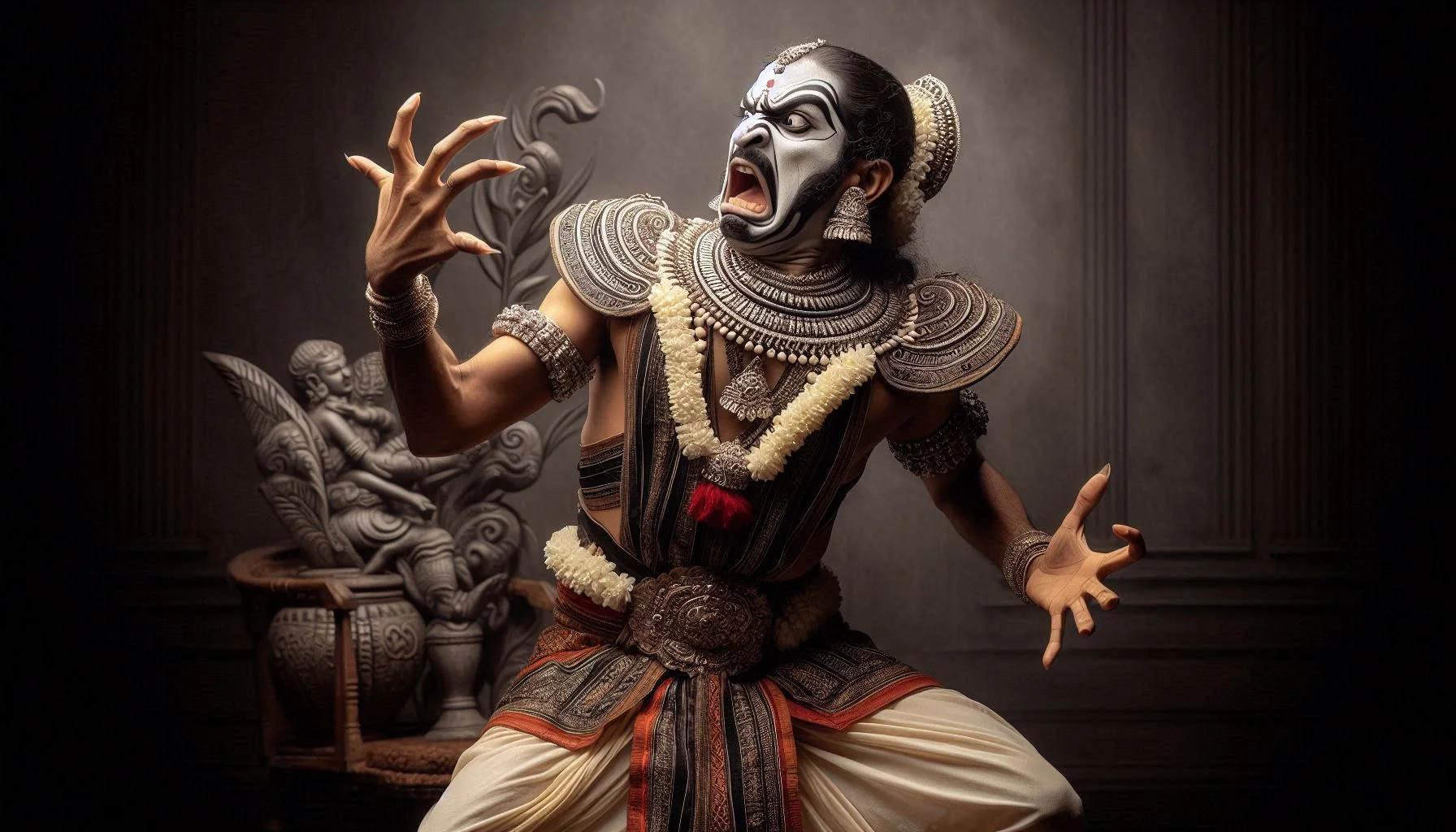
- Contracting the limbs
- Distorting the face
- Scraping
- Spitting
- Being repulsed

"तस्य सर्वाङ्गसंहारमुखविकूणनोल्लेखननिष्ठीवनोद्वेजनादिभिरनुभावैरभिनयः प्रयोक्तव्यः ।"

tasya sarvāṅgasaṃhāramukhavikūṇanollekhananiṣṭhīvanodvejanādibhiranubhāvairabhinayaḥ prayoktavyaḥ |

Meaning:

Its expressions (Anubhāvas) are through ensuing emotions such as contracting the limbs, distorting the face, scraping, spitting, and being repulsed.

Get featured on this blog?
Submit your videos and images of you performing classical dance!
We’d love to showcase your talent and passion for classical dance with the world.
Moreover, the transitory states (Vyabhicaribhavas) that accompany Bibhatsa encompass a wide range of emotive reactions, as described in the text:
- Epilepsy
- Agitation
- Excitement
- Delusion
- Disease
- Death

"भावाश्चास्यापस्मारोद्वेगावेगमोहव्याधिमरणादयः ।"

bhāvāścāsyāpasmārodvegāvegamohavyādhimaraṇādayaḥ |

Meaning:

Its transitory states (Vyabhicāribhāvas) include epilepsy, agitation, excitement, delusion, disease, and death.
The Poetic Representation of Bibhatsa
The classical Sanskrit verse shared in the passage beautifully encapsulates the essence of Bibhatsa Rasa:

"अत्रानुवंश्ये आर्ये भवतः - अनभिमतदर्शनेन च गन्धरसस्पर्शशब्ददोषैश्च । उद्वेजनैश्च बहुभिर्बीभत्सरसः समुद्भवति ॥ ७३॥"

atrānuvaṃśye ārye bhavataḥ - anabhimatadarśanena ca gandharasasparśaśabdadoṣaiśca | udvejanaiśca bahubhirbībhatsarasaḥ samudbhavati || 73||

Meaning:

In this respect, it is said in an Arya verse: Bībhatsa arises from seeing unpleasant things, and from defects in smell, taste, touch, and sound, as well as from various repulsive factors.
Bībhatsa arises from:
- Seeing unpleasant things
- Defects in smell
- Defects in taste
- Defects in touch
- Defects in sound
- Various repulsive factors
This concise yet powerful verse underscores the multifaceted nature of this sentiment, highlighting how it can be evoked through a wide range of sensory experiences and repulsive stimuli.
The Importance of Bibhatsa in the Study of Beauty, especially in Indian Art Forms
In drama, Bibhatsa Rasa is often employed to evoke a sense of revulsion and aversion within the audience, allowing them to engage with the darker and more unsavory aspects of the human experience.
Playwrights and directors may strategically incorporate Bibhatsa-inducing elements, such as the depiction of graphic violence, the portrayal of grotesque characters, or the exploration of taboo topics, to elicit a powerful emotional response from the spectators.
Bibhatsa’s Therapeutic Potential
Interestingly, by confronting and processing feelings of disgust through the controlled environment of artistic expression, artists gain a deeper understanding of their emotional landscape and develop strategies for managing such complex sentiments in real life.
Beyond its artistic and performative applications, Bibhatsa also encompasses a deeper philosophical dimension within the Indian aesthetic tradition.
The sentiment of disgust can be seen as a reflection of the transient and impermanent nature of the material world, prompting a contemplation of the ephemeral and ultimately unsatisfactory nature of sensory pleasures.
Talk to us through this Survey
Articles for you about NatyaShastra
- NatyaShastra: The Ancient Blueprint Of Storytelling
- Bharata Muni and the Sages Discuss the Soul of Natyashastra
- Three Definitions Of Natya (Drama)
- The Birth Of NatyaVeda
- Who Was Bharata Muni And His 100 Sons?
- The Birth of the Apsaras for the Kaishiki Style
- The Origins of Indian Theatre as per NatyaShastra
- Two Kinds of Preliminaries in Classical Indian Dance
- Recaka in Indian Classical Dance: Nuances of Movement
- Pindibandha: India’s Ancient Group Dance Technique As Explained In Natyashastra
- Angaharas: The Building Blocks of Indian Classical Dance
- Samyuta Hastas: 24 Double Hand Gestures as per Shastras
- Asamyuta Hastas: 28 Single Hand Gestures as per Shastras
Share the article
Frequently Asked Questions
Bibhatsa is one of the eight primary Rasas (aesthetic sentiments) recognized in the Indian dramatic tradition. It is characterized by the dominant emotion of disgust, aversion, and hatred.
Bibhatsa Rasa is typically evoked by the sight, sound, smell, taste, or touch of unpleasant, unappealing, or unsavory objects and experiences.
The Anubhavas of Bibhatsa Rasa includes the contracting of the limbs, the distortion of the facial features, scraping or spitting, and a general sense of being repulsed and disturbed.
The Vyabhicaribhavas of Bibhatsa Rasa include emotions like epilepsy, agitation, excitement, delusion, disease, and the fear of death.
Playwrights and directors may strategically incorporate Bibhatsa-inducing elements, such as the depiction of graphic violence or the portrayal of grotesque characters, to evoke a powerful emotional response from the audience.
By confronting and processing feelings of disgust through the controlled environment of artistic expression, individuals may gain a deeper understanding of their emotional landscape and develop strategies for managing such complex sentiments.
The sentiment of disgust can be seen as a reflection of the transient and impermanent nature of the material world, prompting a contemplation of the ephemeral and ultimately unsatisfactory nature of sensory pleasures.
Conclusion
The concept of Bibhatsa, the sentiment of disgust, holds a profound and multifaceted significance in the rich tapestry of Indian aesthetics. From its intricate textual descriptions to its profound philosophical implications, Bibhatsa invites us to confront the darker and more unsavory aspects of the human experience, ultimately leading us to a deeper understanding of the human condition.
When we explore the depths of this emotive state, we are reminded of the power of art and performance to evoke complex and challenging emotions and the potential for such exploration to unlock new avenues of self-understanding and growth.
About Natya-Shastra.in
At Natya-Shastra.in, our mission is to serve as a gateway to the illustrious world of the NāṭyaŚāstra, offering insights, resources, and a platform to delve deeper into the nuances of Indian performing arts. We aim to bring forth the richness of this ancient text, shedding light on the profound wisdom it holds and its everlasting influence on various artistic traditions.
We are here, follow us.
Disclaimer:
Affiliate Links: Some links may earn us a commission (at no cost to you). We only recommend helpful products.
NatyaShastra Glossary: Head over to the Natyashastra Glossary page to know the meaning behind Sanskrit terms used in the articles.
Images & Videos: Representational only, not exact depictions.
Knowledge Source & References: Inspired by ancient Natyashastra scriptures, open to interpretation.
Disclaimer: Educational only, not professional advice. Consult a qualified expert for specific needs.
Offer Your Expertise