Estimated reading time: 6 minutes
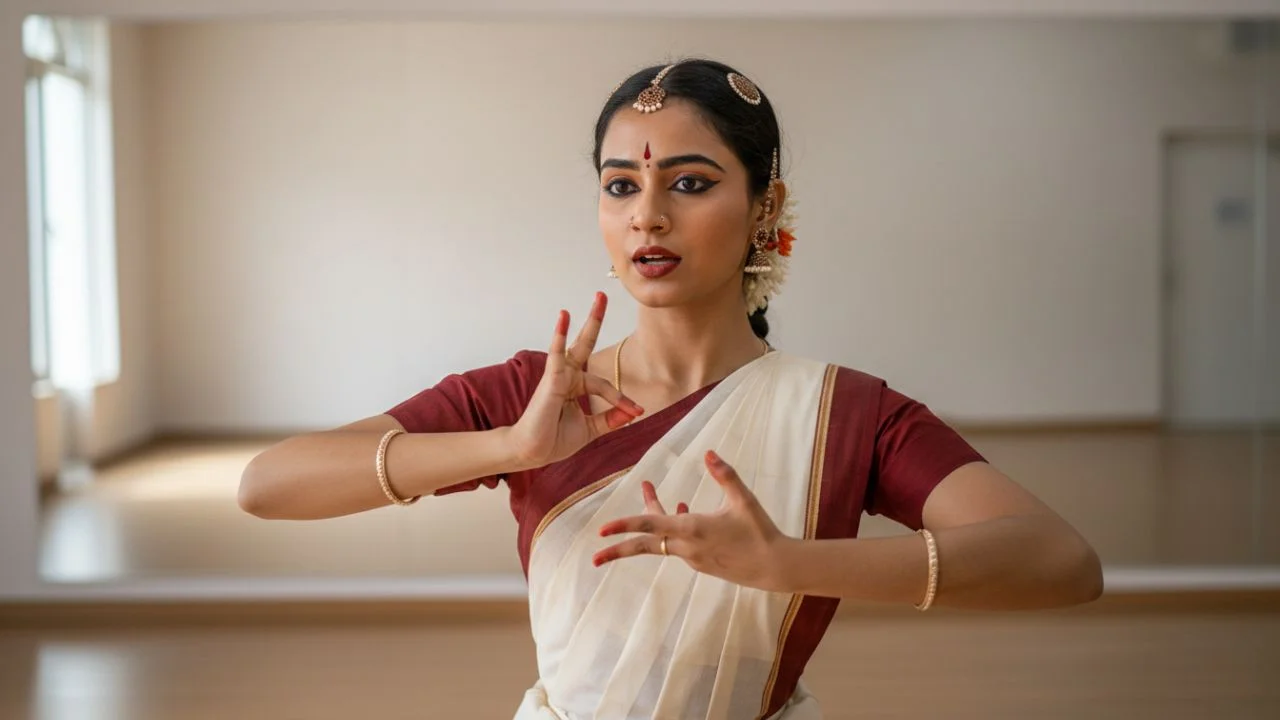
As performers, we often train body first. Hasta. Chari. Angahara. But Bharata places enunciation at the heart of theatrical communication. It is not the pronunciation or the volume. Enunciation as a rhythmic, intentional act.

We are here, follow us.
Why enunciation decides rasa
In performance, the audience rarely remembers exact words. They remember how those words arrived. It could be…
- A pause before a confession.
- A rising note before courage.
- Or a softened ending after grief.
Sage Bharata tied enunciation to:
- breath
- pitch
- tempo
- emotional intent
- spatial relation

Get featured on this blog?
Share your videos and images of you performing classical dance!
We’d love to showcase your talent and passion for classical dance with the world. (with proper credits)
What enunciation means in Natyashastra?
Enunciation is the disciplined shaping of spoken sound so that meaning becomes perceivable, emotional, and embodied.

It flows through six limbs:
- Viccheda (separation)
- Arpana (presentation)
- Visarga (closure)
- Anubandha (continuity)
- Dipana (brilliance)
- Prashamana (calming)
Viccheda: It is separation through pause
Viccheda arises from viraama, the pause. This pause is silence filled with intention. Here’s how to do it.
- Pause before a key word, not after.
- Let the breath settle. Do not inhale loudly.
- Maintain eye focus. The body must stay alive.
In Sringara, you can pause before the beloved’s name. In Veera, take a pause before a vow. And in Raudra, pause before the threat.
Arpana: It’s the presentation that fills space
Arpana means offering. Sound is offered to the auditorium. It is voice that expands without strain. To do this,
- Use clear modulation. Avoid monotone.
- Allow resonance to travel outward.
- Think of sound as a widening circle.
Examples include, a king addressing the sabha. A lover praising beauty. Or a messenger announcing news. The voice must occupy space gracefully.
Visarga: It is the closure of thought
Visarga is the completion of a sentence, not merely stopping speech. The listener must feel resolution. To do this,
- Gently lower pitch at the end.
- Release the final consonant clearly.
- Do not rush the ending.
We can suggest some fine examples. In Bibhatsa or Bhayanaka, closure becomes sharp and clipped. In Shanta, closure softens and dissolves. Remember, incomplete closure creates confusion. But proper visarga brings clarity.
Anubandha: It is continuity without break
Anubandha is the absence of separation within a sense-group. Here, words flow as one unit of meaning. To perform this,
- Do not take breath mid-phrase.
- Maintain rhythmic unity.
- Let intention carry the phrase forward.
Quick examples can be the commands given by the commander. Battle cries. Swift narration.
Dipana: It is brilliance through rising pitch
Dipana is the gradual augmentation of notes across the three voice registers. This is a controlled ascent. There is no shouting involved in this. To effectively perform this on stage,
- Begin from chest or throat.
- Rise progressively toward the head.
- Keep tone aligned with emotion.
An example can be a heroic resolve gaining strength. A wonder unfolding. Or a joy expanding.
Prashamana: It is calming without dullness
Prashamana lowers high pitch without discord. To do this,
- Ease pitch downward slowly.
- Maintain resonance.
- Avoid breathy weakness.
Recall any scene after laughter subsides or after anger resolves. That space is prashamana.
How to apply enunciation to rasa
Sage Bharata clearly mentions for Hasya (Comic) and Sringara (Erotic),
- Arpaaa
- Viccheda
- Dipana
- Prashamana (with a medium tempo)
For Karuna (Pathetic),
- Dipana
- Prashamana (with a slow tempo)
Veera (Heroic), Raudra (Furious), and Adbhuta (Marvellous) uses,
- Viccheda
- Prashamana
- Dipana
- Anubandha (with quick tempo)
For Bibhatsa (Odious) and Bhayanaka (Terrible),
- Visarga
- Viccheda
Pitch, register, and spatial awareness
The Natyashastra directly links voice to physical distance, and this relationship is foundational to believable performance.
When a character addresses someone far away, the voice must rise into a high pitch and emerge from the head register.
When the listener is closer, the voice settles into a medium pitch drawn from the throat. And when speaking to someone at one’s side, the sound must drop into a low pitch supported by the chest.
Bharata is firm about one rule here. A performer must never jump abruptly from low to high pitch or from high to low. All transitions must be gradual.
Related articles
Frequently Asked Questions
Enunciation refers to the disciplined shaping of voice through pause, pitch, continuity, and tempo so that spoken sound conveys meaning and rasa clearly on stage.
Bharata describes six limbs of enunciation: viccheda, arpaṇa, visarga, anubandha, dīpana, and praśamana.
Pitch reflects spatial awareness. High pitch reaches distant characters, medium pitch suits nearby interaction, and low pitch is used for intimate or side conversations.
Tempo expresses emotional velocity. Each rasa demands a specific tempo, and incorrect tempo weakens emotional truth even if pronunciation is accurate.
By practicing a single line with conscious pauses, controlled pitch movement, varied tempos, and close attention to breath rather than words.
Share the article
Final thoughts
Enunciation is not a decorative layer added at the end of training. It needs to be part of the training structure from the beginning. A dancer who neglects voice loses half the text, while an actor who understands enunciation gains command over rasa.
About Natya-Shastra.in
At Natya-Shastra.in, our mission is to serve as a gateway to the illustrious world of the Natyashastra. We offer insights, resources, and a platform to delve deeper into the nuances of Indian performing arts.
Also, we aim to bring forth the richness of this ancient text. We try to shed light on the profound wisdom it holds and its everlasting influence on various artistic traditions.
We are here, follow us.
Disclaimer:
Affiliate Links: Some links earn us a commission (at no cost to you). We only recommend helpful products.
NatyaShastra Glossary: Head over to the Natyashastra Glossary page to know the meaning behind Sanskrit terms used in the articles.
Images & Videos: Representational only, not exact depictions.
Knowledge Source & References: Inspired by ancient Natyashastra scriptures, open to interpretation.
Offer Your Expertise