Estimated reading time: 5 minutes
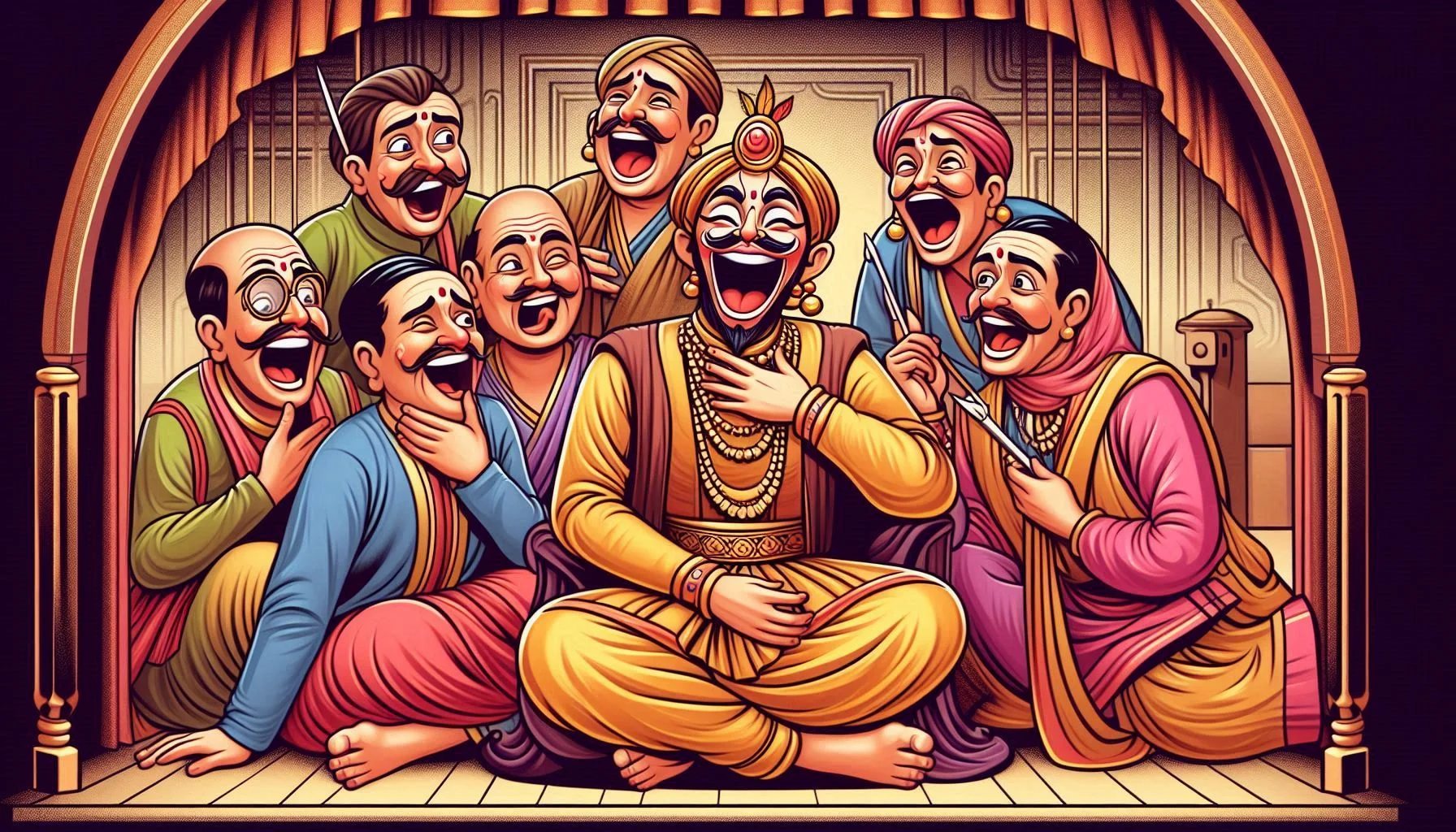
Hasya, the aesthetic sentiment of humor and laughter, holds a unique place in Bharata Muni‘s Nāṭyaśāstra. This ancient Indian treatise on performing arts provides a detailed exploration of Hasya Rasa, offering insights into its causes, expressions, and types.
Let’s delve into the essence of Hāsya Rasa and understand its significance in dramatic performances.

Hasya: The Foundation of Laughter
At the heart of Hāsya is the concept of Hāsa (laughter), which serves as its permanent mood or Sthāyibhāva. Hasya has various triggers and responses associated with laughter.
So, in essence,
Hasya Rasa=Vibhāvas (Determinants)+Anubhāvas (Physical Manifestations)+Vyabhicāribhāvas (Transitory States)

विपरितालङ्कारैर्विकृताचराभिधानवेषैश्च । विकृतैरर्थविशेषैर्हसतीति रसः स्मृतो हास्यः ॥ ४९॥

viparitālaṅkārairvikṛtācarābhidhānaveṣaiśca | vikṛtairarthaviśeṣairhasatīti rasaḥ smṛto hāsyaḥ || 49||

Meaning:

Hāsya Rasa is described as laughter arising from absurd ornaments, distorted actions, speech, dress, and peculiar situations.
This verse encapsulates the essence of Hasya, highlighting how absurdity and distortion in various forms lead to laughter.
Hasya: The Determinants of Humor
The determinants (Vibhāvas) of Hāsya include various elements that provoke laughter. These elements are often related to the absurd and the unexpected:
- Distorted appearances
- Ridiculous attire
- Boldness and audacity
- Greed and deceit
- False prattle and sarcasm
- Examples of defects
These factors collectively contribute to the emergence of Hasya Rasa, creating inherently humorous situations.
We are here, follow us.
Hasya: Expressions and Manifestations
The expression of Hasya, known as Anubhāvas, is depicted through specific physical reactions:
- Twitching of the lips, nose, and cheeks
- Widening and contracting of the eyes
- Sweating and facial redness
- Side glances
These physical cues are essential in conveying the emotion of laughter on stage, making the humor palpable to the audience.
Hāsya: Transitory States
The transitory states (Vyabhicāribhāvas) associated with Hasya include fleeting emotions that enhance the experience of humor:
- Mockery
- Laziness
- Drowsiness
- Sleep
- Dreaming and awakening
These transient moods add layers to the primary sentiment of Hāsya, enriching the overall impact of the performance.

Get featured on this blog?
Submit your videos and images of you performing classical dance!
We’d love to showcase your talent and passion for classical dance with the world.
Hasya: Types of Laughter
Hasya Rasa is classified into two main types:
- Ātmastha (Self-Oriented): When the character laughs at themselves, creating humor through their actions.
- Parastha (Other-Oriented): When the character makes others laugh, often through interactions and reactions.
This duality in Hasya Rasa ensures a dynamic interplay of humor within dramatic narratives.
Articles for you about NatyaShastra
- NatyaShastra: The Ancient Blueprint Of Storytelling
- Bharata Muni and the Sages Discuss the Soul of Natyashastra
- Three Definitions Of Natya (Drama)
- The Birth Of NatyaVeda
- Who Was Bharata Muni And His 100 Sons?
- The Birth of the Apsaras for the Kaishiki Style
- The Origins of Indian Theatre as per NatyaShastra
- Two Kinds of Preliminaries in Classical Indian Dance
- Recaka in Indian Classical Dance: Nuances of Movement
- Pindibandha: India’s Ancient Group Dance Technique As Explained In Natyashastra
- Angaharas: The Building Blocks of Indian Classical Dance
- Samyuta Hastas: 24 Double Hand Gestures as per Shastras
- Asamyuta Hastas: 28 Single Hand Gestures as per Shastras
Share the article
Frequently Asked Questions
Hasya Rasa, in Nāṭyaśāstra, refers to the aesthetic sentiment of humor and laughter, characterized by laughter-inducing elements and expressions.
Hasya Rasa is triggered by determinants like distorted appearances, ridiculous attire, boldness, greed, deceit, and sarcastic remarks.
Hasya Rasa is expressed through physical manifestations such as twitching of the lips, widening of the eyes, sweating, facial redness, and side glances.
The transitory states include mockery, laziness, drowsiness, sleep, dreaming, and awakening, which enhance the experience of humor.
Hāsya Rasa is classified into Ātmastha (self-oriented), where the character laughs themselves, and Parastha (other-oriented), where the character makes others laugh.
Conclusion
Hasya Rasa, the sentiment of humor and laughter, is a vital component of dramatic performance as described in Bharata Muni‘s Nāṭyaśāstra.
Through determinants like absurd attire and sarcastic remarks, physical manifestations such as facial expressions, and transitory states like mockery and drowsiness, it brings joy and entertainment to the audience.
Understanding the types of Hāsya—self-oriented and other-oriented—allows performers to evoke laughter and create a memorable theatrical experience.
About Natya-Shastra.in
At Natya-Shastra.in, our mission is to serve as a gateway to the illustrious world of the NāṭyaŚāstra, offering insights, resources, and a platform to delve deeper into the nuances of Indian performing arts. We aim to bring forth the richness of this ancient text, shedding light on the profound wisdom it holds and its everlasting influence on various artistic traditions.
We are here, follow us.
Disclaimer:
Affiliate Links: Some links may earn us a commission (at no cost to you). We only recommend helpful products.
NatyaShastra Glossary: Head over to the Natyashastra Glossary page to know the meaning behind Sanskrit terms used in the articles.
Images & Videos: Representational only, not exact depictions.
Knowledge Source & References: Inspired by ancient Natyashastra scriptures, open to interpretation.
Disclaimer: Educational only, not professional advice. Consult a qualified expert for specific needs.

Offer Your Expertise