Estimated reading time: 9 minutes
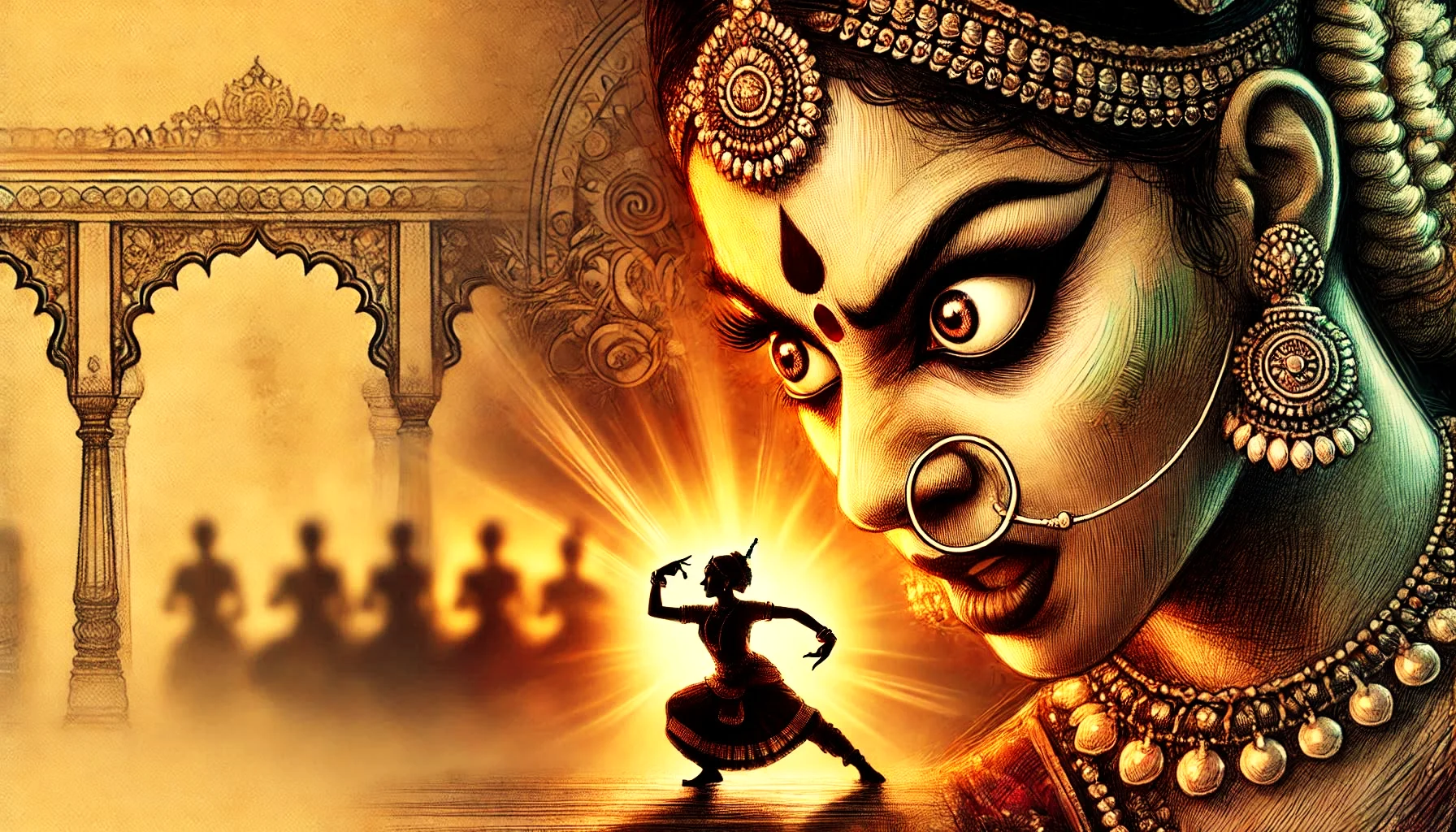
Eyeballs and Eyelids! The Natyashastra offers a detailed blueprint for mastering expression—right down to the smallest elements. Among its treasure trove of guidance, the use of eyeballs (tārā) and eyelids (puṭa) stands out as a critical tool. With precise movements of these minor limbs, an artist can convey a universe of emotions.

We are here, follow us.
The Power of Precision in Expression
“A glance, whether cursory or fixed, can communicate more than a thousand words.” This line of thought resonates profoundly with the Natyashastra, where every minor movement is infused with meaning. Why should a professional performer care?
Because mastery over these details elevates an act from good –> unforgettable.
Eyeballs and eyelids seem inconspicuous, but their deliberate use in conveying sentiments (rasa) and states (bhava) is a hallmark of classical artistry.
तारापुटभ्रुवां कर्म गदतो मे निबोधत ।
भ्रमणं वलनं पातश्चलनं सम्प्रवेशनम् ॥ ९८॥

tārāpuṭabhruvāṃ karma gadato me nibodhata |
bhramaṇaṃ valanaṃ pātaścalanaṃ sampraveśanam || 98||

Meaning: Now listen carefully as I describe the actions of the eyes, eyelids, and eyebrows: Circular movement (भ्रमणं), bending (वलनं), drooping (पातः), shifting (चलनं), and inward penetration (सम्प्रवेशनम्).


Want to get featured on this blog?
Share your videos and images of you performing these eye movements!
We’d love to showcase your talent and credit you for your contribution.
विवर्तनं समुद्वृत्तं निष्क्रामः प्राकृतं तथा ।
पुटान्तर्मण्डलावृत्तिस्तारयोर्भ्रमणं स्मृतम् ॥ ९९॥
vivartanaṃ samudvṛttaṃ niṣkrāmaḥ prākṛtaṃ tathā |
puṭāntarmaṇḍalāvṛttistārayorbhramaṇaṃ smṛtam || 99||
Meaning: Twisting (विवर्तनं), upward movement (समुद्वृत्तं), stepping out (निष्क्रामः), and natural movement (प्राकृतं) are also noted. The circular movement of the eyelids within their sockets and the rotation of the pupils are described as भ्रमणं.

In this article, we will cover the gestures of eyeballs and the eyelids. As eyebrows have specific usages in dance, we will dedicate a separate article for their nuances and significance.
Eyeballs: The Nine Gestures
The Natyashastra identifies nine distinct gestures of the eyeballs, each tailored to specific sentiments. Here’s a breakdown:
1. Bhramaṇa (Moving Round)
- Description: The eyeballs turn randomly, creating an impression of being lost in thought or overwhelmed.
- How-To: Sit before a mirror and practice rotating your eyes in different directions without moving your head. Gradually increase speed while maintaining control.
- Usage: Seen in Heroic and Furious sentiments, where dynamic energy or confusion reigns.
- Example: A warrior searching the battlefield for an ally.
2. Valana (Turning)
- Description: The eyeballs move obliquely, signaling suspicion or a calculating mindset.
- How-To: Tilt your head slightly to one side and practice slow, deliberate oblique eye movements while keeping your body still.
- Usage: Common in Terrible and Heroic sentiments.
- Example: A king’s wary glance at a scheming courtier.
3. Pātana (Relaxing)
- Description: The eyeballs relax, expressing weariness or grief.
- How-To: Allow your gaze to lower naturally, as though the weight of emotion is pulling your eyes downward.
- Usage: Key to the Pathetic sentiment.
- Example: A grieving mother gazing at her child’s belongings.
4. Calana (Trembling)
- Description: A slight trembling of the eyeballs, showing fear or nervousness.
- How-To: Lightly tense your eye muscles and practice micro-movements to simulate trembling. Avoid exaggeration.
- Usage: Best suited for moments of hesitation or unease.
- Example: A young woman trembling before a daunting challenge.
5. Saṁpraveśana (Drawing Inside)
- Description: The eyeballs retreat inward, conveying introspection or distaste.
- How-To: Focus on retracting your gaze inward by looking down and slightly crossing your eyes. Practice in short intervals.
- Usage: Found in Comic and Odious sentiments.
- Example: An actor portraying an awkward or repellent situation.
6. Vivartana (Turning Sideways)
- Description: A sidelong glance, oozing charm or coyness.
- How-To: Practice moving your eyes to the far corners while keeping your head still. Pair with subtle eyebrow movements for emphasis.
- Usage: Central to the Erotic sentiment.
- Example: A playful lover’s teasing look.
7. Samudvṛtta (Raising Up)
- Description: The eyeballs lift upwards, evoking pride or anger.
- How-To: Gradually raise your gaze skyward, maintaining a steady expression that matches the intended emotion.
- Usage: Seen in Heroic and Furious sentiments.
- Example: A general rallying troops with a fiery speech.
8. Niṣkramaṇa (Going Out)
- Description: The eyeballs appear to push outward, creating a sense of awe or terror.
- How-To: Widen your eyes slightly while pushing your gaze forward, as if trying to focus on something distant.
- Usage: Effective in Terrible and Marvelous sentiments.
- Example: A sage witnessing a divine vision.
9. Prākṛta (Natural)
- Description: The eyeballs stay neutral, representing calm or balance.
- How-To: Relax your facial muscles entirely and allow your gaze to settle naturally.
- Usage: Used in all other sentiments as a default state.
- Example: A peaceful monk meditating.
Eyelids: The Nine Gestures
Complementing the movements of the eyeballs are the gestures of the eyelids. These subtle actions amplify emotions and add depth to expression.
ताराकृतोऽस्यानुगतं पुटकर्म निबोधत ।
उन्मेषश्च निमेषश्च प्रसृतं कुञ्चितं समम् ॥ १११॥

tārākṛto'syānugataṃ puṭakarma nibodhata |
unmeṣaśca nimeṣaśca prasṛtaṃ kuñcitaṃ samam || 111||

Meaning: Now listen to the actions of the eyelids: opening (उन्मेष), closing (निमेष), wide opening (प्रसृतं), contraction (कुञ्चितं), and neutral position (समम्).

1. Unmeṣa (Opening)
- Description: The eyelids part gently, signifying curiosity or alertness.
- How-To: Slowly open your eyes as if noticing something intriguing. Practice varying the speed to match different emotions.
- Usage: Often seen in moments of anger or surprise.
- Example: A warrior spotting an approaching enemy.
2. Nimeṣa (Closing)
- Description: The eyelids come together, signaling calm or thought.
- How-To: Close your eyes smoothly, focusing on the transition to create a serene effect.
- Usage: Found in anger or moments of intense focus.
- Example: A leader formulating a strategy.
3. Prasṛta (Expanding)
- Description: The eyelids widen dramatically, expressing wonder or awe.
- How-To: Practice opening your eyes fully while lifting your eyebrows slightly to enhance the effect.
- Usage: Key to Marvelous and Heroic sentiments.
- Example: A devotee witnessing a celestial miracle.
4. Kuñcita (Contracted)
- Description: The eyelids contract slightly, showing distaste or irritation.
- How-To: Narrow your eyes subtly, pairing the movement with a slight scrunch of the nose for emphasis.
- Usage: Seen in Odious sentiments.
- Example: Reacting to a foul odor.
5. Sama (Level)
- Description: The eyelids rest naturally, reflecting tranquility or love.
- How-To: Keep your eyelids relaxed and still, avoiding any exaggerated movement.
- Usage: Used in Erotic and peaceful states.
- Example: A lover gazing serenely at their partner.
6. Vivartita (Raising Up)
- Description: The eyelids lift to expose more of the eyeball, conveying anger.
- How-To: Practice lifting your upper eyelids quickly without raising your eyebrows, creating a sharp, intense look.
- Usage: Found in intense Furious states.
- Example: A teacher reprimanding a misbehaving student.
7. Sphurita (Throbbing)
- Description: A gentle throbbing of the eyelids, denoting jealousy or anxiety.
- How-To: Lightly flutter your eyelids while maintaining tension in the surrounding muscles.
- Usage: Seen in moments of emotional tension.
- Example: A rival observing their opponent’s triumph.
8. Pihita (Resting)
- Description: The eyelids stay closed, representing sleep or withdrawal.
- How-To: Close your eyes naturally and pair the gesture with relaxed facial muscles for authenticity.
- Usage: Suited for dreaming or meditative states.
- Example: A sage lost in profound meditation.
9. Vitāḍita (Driven)
- Description: The eyelids jerk or are struck involuntarily.
- How-To: Simulate a sudden flutter or twitch by tensing and releasing your eyelid muscles quickly.
- Usage: Reflects moments of pain or surprise.
- Example: A performer enacting a sudden injury.
Combining Eyeballs and Eyelids for High Impact
The magic of expression lies in synchronizing these movements. For instance, pairing Vivartana (sideways turning) of the eyeballs with Sama (level) eyelids creates a flirtatious, seductive glance. Meanwhile, combining Bhramaṇa (moving round) with Prasṛta (expanding) eyelids can evoke sheer astonishment.
Frequently Asked Questions
Eyes are essential in dance because they express emotions, convey stories, and establish a connection with the audience. By controlling glances, shifts, and focus, dancers can enhance their movements and create a more compelling narrative.
The eye line in dance refers to the direction a dancer’s eyes are looking during a performance. It guides the audience’s attention and enhances the energy and flow of movements, making performances more impactful.
Dancers often emphasize their eyes with makeup or expressions to make them show larger. This helps convey emotions vividly and ensures their expressions are visible even to distant audience members, especially on stage.
Eyes are special because they serve as a window to the soul, reflecting genuine emotions. In dance, they bridge the performer and audience, transforming movements into an emotionally resonant experience.
There is no single “ideal” dancer body—each form of dance values different physical attributes. However, traits like flexibility, strength, coordination, and endurance are universally important. Confidence and the ability to connect emotionally with the audience often outweigh physical characteristics.
Share the article
Conclusion
Mastering the art of eyeballs and eyelids as per the Natyashastra is a journey toward heightened expression. These gestures, when practiced with intent, can transform any performance into a masterpiece.
It doesn’t matter if you’re a seasoned performer or an aspiring artist, the secrets of tārā and puṭa offer an invaluable tool to captivate audiences. Try it out, experiment, and watch the magic unfold!
About Natya-Shastra.in
At Natya-Shastra.in, our mission is to serve as a gateway to the illustrious world of the NāṭyaŚāstra. We offer insights, resources, and a platform to delve deeper into the nuances of Indian performing arts.
Also, we aim to bring forth the richness of this ancient text, shedding light on the profound wisdom it holds and its everlasting influence on various artistic traditions.
We are here, follow us.
Disclaimer:
Affiliate Links: Some links may earn us a commission (at no cost to you). We only recommend helpful products.
NatyaShastra Glossary: Head over to the Natyashastra Glossary page to know the meaning behind Sanskrit terms used in the articles.
Images & Videos: Representational only, not exact depictions.
Knowledge Source & References: Inspired by ancient Natyashastra scriptures, open to interpretation.
Offer Your Expertise