Estimated reading time: 6 minutes
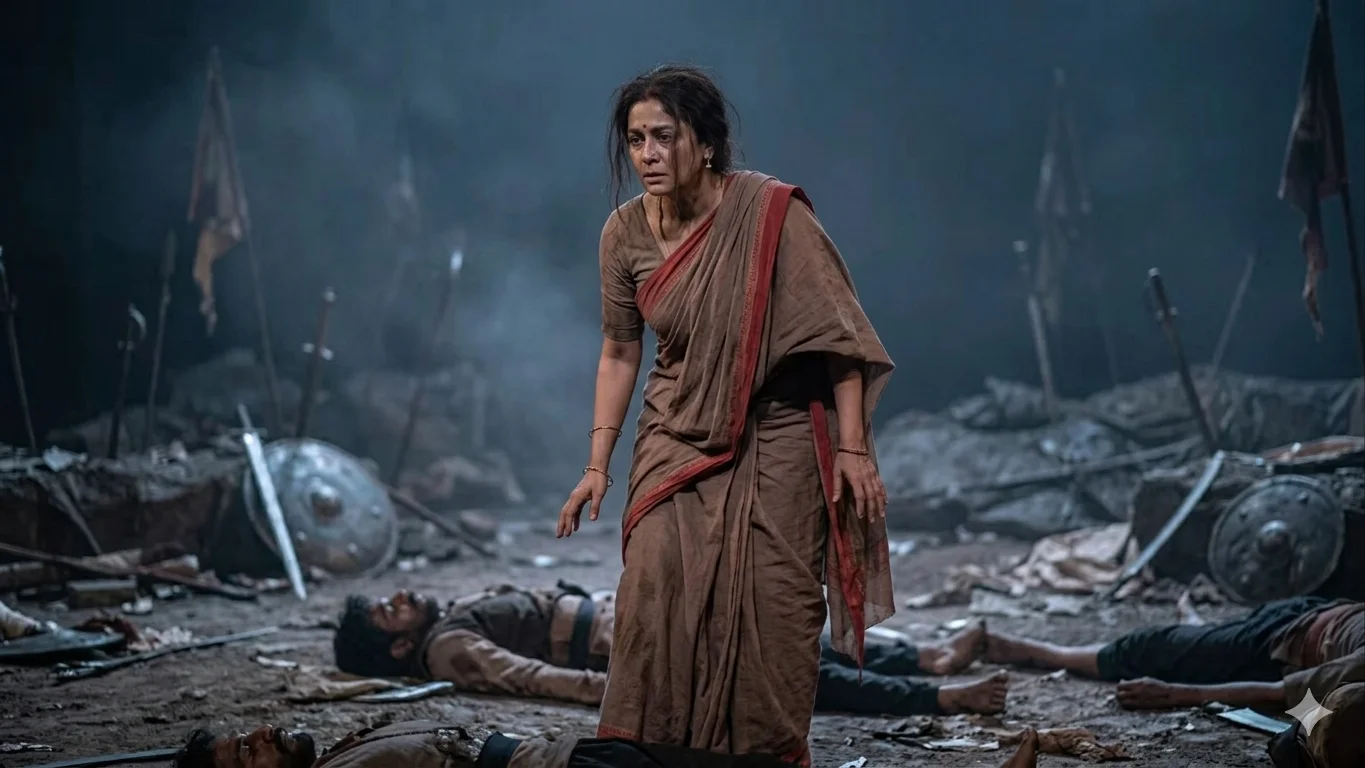
“Where the hero falls, the truth of human emotion rises.” This line captures the soul of the Anka (Utsṛṣṭikāṅka) described in the Natyashastra. Among the Dasarupaka, this form does not celebrate victory. It lingers in aftermath and observes the emotional residue of conflict, not the spectacle itself.

We are here, follow us.
What is Anka?
Within the framework of Dasarupaka, Anka (Utsṛṣṭikāṅka) is a one-act dramatic form rooted in loss, aftermath, and emotional collapse.
Natyashastra describes that,
- Plot may be well-known, occasionally original
- Characters are human, not divine
- Dominant rasa is Karuna (pathetic sentiment)
- Focus on lamentation after battle, not the battle itself
- Movement is bewildered, disoriented, slow
- Avoids grand (ārbhaṭī), energetic (sāttvatī), and graceful (kaiśikī) styles
- Narrative arc reflects decline or fall, not rise
This here is very important. Anka is all about consequence.
For a broader context, you may refer to this detailed overview of all forms: Dasarupakas: How To Perform Ten Kinds of Play

Karuna is the emotional aspect of Anka
Karuna is often reduced to sorrow. That is somehow incomplete.
In Anka, Karuna is:
- Heavy
- Lingering
- Physically embodied
Here, the performer must internalize loss.
Let us work this out with a practical approach
- Breath work first: Keep it slow but uneven breathing with slight pauses. Hold that exhale before speech.
- Voice texture: Avoid projection-heavy delivery, instead, use broken phrases. Let the silence do the speaking.
- Eye focus: Do not look at your co-actors constantly. Look at empty spaces.
- Body weight: Soften your spine and slightly lean forward. Shoulders must lose its structure.
How to structure an Anka performance
1. Opening: after the end
The play begins after the climax. For example, when a battle is over.
Stage example: Show a battlefield with no movement. A single survivor enters slowly. They look around without reacting immediately.
शान्ते रणक्षेत्रे तु एकः शेषो विवेश सः।
चतुर्दिशं निरीक्षन्तो न तूर्णं प्रतिपद्यते॥
Let the stillness establish the world.
2. Entry of lamenting characters
Women play a central role here. The text clearly emphasizes strī-vilāpa.
Execution details:
- Entry is uncoordinated
- Walking is uneven
- Hands reach outward, often without focus
Example:
A mother searching for her son among fallen warriors. She does not cry instantly. She recognizes slowly and then breaks.
पुत्रं वीरगणे मातास्मरन्ती नैव रोदिति।
क्रमेण तं विजानाति ततो भग्ना रुदत्यपि॥
putraṃ vīragaṇe mātāsmarantī naiva roditi |
krameṇa taṃ vijānāti tato bhagnā rudaty api ||
3. Dialogue and utterance
Speech in Anka is mostly fragmented. Here avoid long, polished monologues.
Instead, use:
- Short sentences
- Repetition of names
- Questions without answers
Example lines:
- “You said you would return.”
- “Why is this silent?”
- “Who will speak now?”
4. Movement language: bewilderment
Natyashastra insists on bhrānta-ceṣṭā. The movements must reflect disorientation.
Actionable techniques:
- Half-turns without purpose
- Walking in circles
- Sudden stillness mid-step
5. Climax: Is about realization without resolution
There is no victory or closure. The climax is a moment of emotional collapse or acceptance.
Example:
A character stops searching. They sit silently, and remove their ornaments and place it beside the fallen.
This is all symbolic linked to Karuna rasa.
Stylistic boundaries you must respect
What to avoid
- Ārbhaṭī (grand): No heroics or dramatic declarations.
- Sāttvatī (energetic): No intensity-driven action.
- Kaiśikī (graceful): No elegance or romantic softness.
What to embrace
- Rawness
- Stillness
- Emotional discontinuity
Character design in Anka
Human, grounded, vulnerable
Unlike forms like Nataka, Anka removes divine intervention.
Characters must feel:
- Mortal
- Limited
- Emotionally exposed
Common roles
- Bereaved mother
- Widow
- Surviving soldier
- Messenger of death
Stage design ideas
The environment must reflect aftermath.
Recommended elements:
- Broken weapons
- Fallen flags
- Scattered ornaments
Important note on celestial heroes
Natyashastra adds an interesting layer.
When celestial heroes are involved:
- Their battles must occur in Bhārata-varṣa
- Their pleasures occur elsewhere, in divine realms
If you adapt mythological content into Anka, ensure:
- The emotional aftermath is grounded on earth
- The grief belongs to the human plane
Related articles
Frequently Asked Questions
Anka, or Utsṛṣṭikāṅka, is a one-act dramatic form in the Dasarupaka tradition that focuses on the emotional aftermath of events, especially loss and lamentation, dominated by Karuna Rasa.
The primary rasa is Karuna (pathetic sentiment), expressed through grief, despondency, and emotional breakdown after conflict.
Characters are human, not divine. Common roles include grieving women, survivors of battle, messengers, and close relations of the fallen.
Scenes depict the aftermath of battle, focusing on lamentation, confusion, and emotional collapse rather than action or heroism.
Performers must avoid grand, energetic, and graceful styles. The focus should remain on stillness, raw emotion, and fragmented expression.
Share the article
Final thoughts
Anka is highly uncomfortable. It refuses resolution and holds the audience in a space most performances avoid.
As a performer, you must resist the urge to beautify it. Sit with the silence. Let the pauses stretch. Allow the body to carry what words cannot.
And that is pure Natya.
About Natya-Shastra.in
At Natya-Shastra.in, our mission is to serve as a gateway to the illustrious world of the Natyashastra. We offer insights, resources, and a platform to delve deeper into the nuances of Indian performing arts.
Also, we aim to bring forth the richness of this ancient text. We try to shed light on the profound wisdom it holds and its everlasting influence on various artistic traditions.
We are here, follow us.
Disclaimer:
Affiliate Links: Some links earn us a commission (at no cost to you). We only recommend helpful products.
NatyaShastra Glossary: Head over to the Natyashastra Glossary page to know the meaning behind Sanskrit terms used in the articles.
Images & Videos: Representational only, not exact depictions.
Knowledge Source & References: Inspired by ancient Natyashastra scriptures, open to interpretation.

Offer Your Expertise