Estimated reading time: 7 minutes
Eight Temperamental States! It’s about emotions, real, visceral emotions that pull the audience in and keep them hooked. But how does an actor make that happen?
Mastery of something ancient yet timeless. The Eight Temperamental States, or Sattvika Bhavas, laid out in the Nāṭyaśāstra.
These aren’t your typical acting techniques. They are physical, almost involuntary reactions to deep emotional stimuli.
Have you ever seen an actor’s face flush with anger or their hands tremble with fear? That’s Sattvika Bhava in action.
What’s incredible is that these techniques were documented over 2,000 years ago, and still work wonders in performances today.

We are here, follow us.
But First, What Are the Eight Rasas?
Before diving into the temperamental states, let’s first revisit the eight fundamental Rasas that shape Indian classical drama:
- Śṛṅgāra (Love)
- Hāsya (Humor)
- Karuna (Compassion)
- Raudra (Anger)
- Vīra (Courage)
- Bhayanaka (Fear)
- Bībhatsa (Disgust)
- Adbhuta (Wonder)
And,
- Added later is Shanta Rasa.
These emotions are not merely intellectual; they are to be felt deeply by both the actor and the audience. The Sattvika Bhavas, or temperamental states, act as the physical manifestations of these emotions, creating an experience beyond verbal and facial expressions. Here’s how they work.
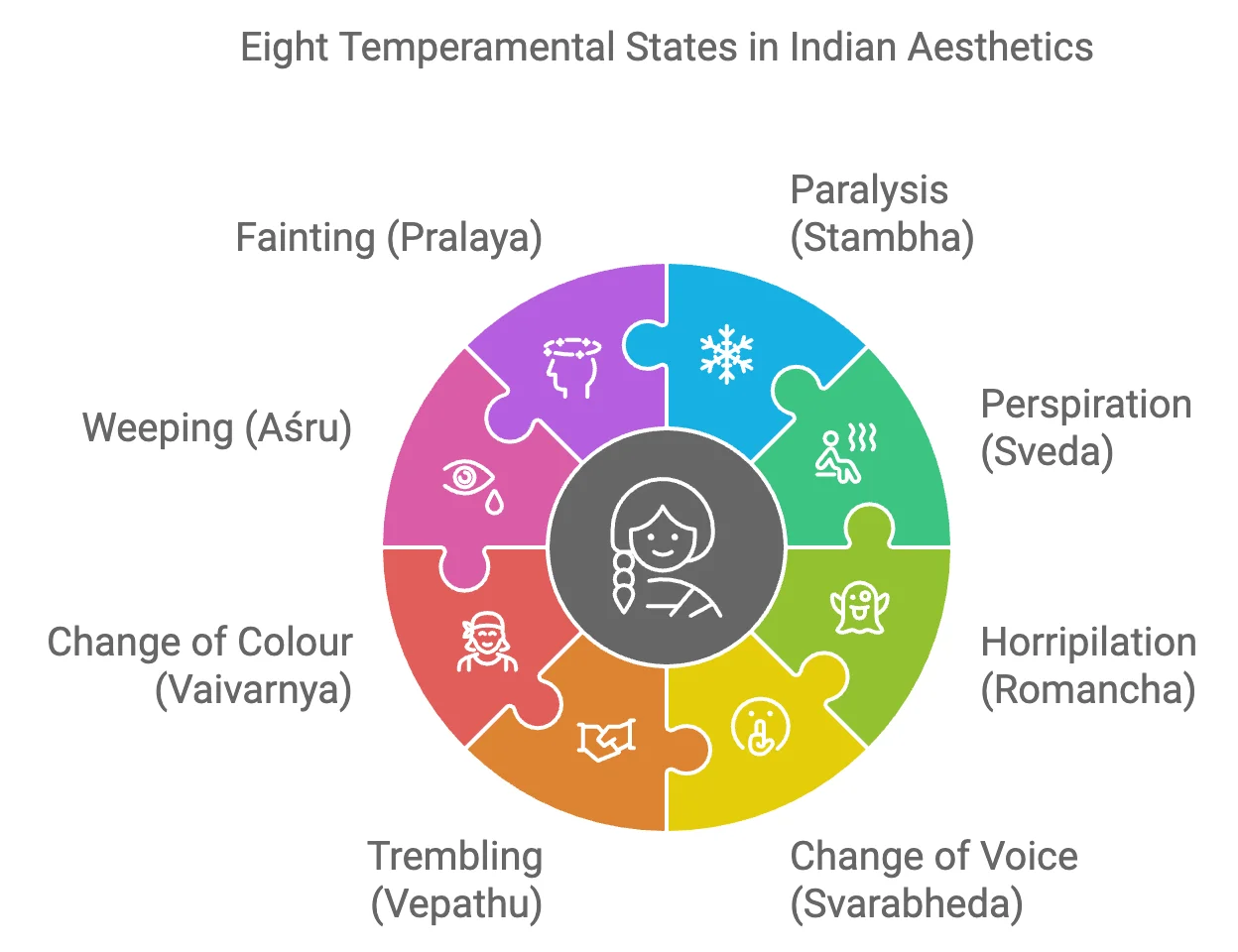
Eight Temperamental States
- Paralysis (Stambha)
- Perspiration (Sveda)
- Horripilation (Romancha)
- Change of Voice (Svarabheda)
- Trembling (Vepathu)
- Change of Colour (Vaivarnya)
- Weeping (Aśru)
- Fainting (Pralaya)

स्तम्भः स्वेदोऽथ रोमाञ्चः स्वरभेदोऽथ वेपथुः ।
वैवर्ण्यमश्रु प्रलय इत्यष्टौ सात्विकाः स्मृताः ॥ २२॥

stambhaḥ svedo'tha romāñcaḥ svarabhedo'tha vepathuḥ |
vaivarṇyamaśru pralaya ityaṣṭau sātvikāḥ smṛtāḥ || 22||

Meaning:

"Immobility, sweating, horripilation, voice alteration, trembling, discoloration, tears, and fainting—these are the eight recognized sāttvika reactions."

These are physical responses that occur when an actor or character experiences deep emotions on stage. The sāttvika bhāvas are an integral part of acting in classical Indian drama and are essential for depicting intense emotions authentically.

Get featured on this blog?
Submit your videos and images of you performing classical dance!
We’d love to showcase your talent and passion for classical dance with the world.
Deep Dive of Eight Temperamental States of Natyashastra
The Eight Temperamental States reveal the inner emotional turbulence of a character. These involuntary physical reactions arise when the emotions become too intense for mere words or gestures to convey.
1. Paralysis (Sthambha)
Paralysis occurs when extreme shock or fear immobilizes a character. This state is typically Bhayanaka Rasa (Fear), but it can also emerge in response to deep sorrow or awe. The actor becomes motionless, and their face and body freeze in time.
- Example: Imagine a soldier in battle who suddenly faces imminent death. The paralysis reflects the profound fear that overwhelms him, leaving him unable to act.
2. Perspiration (Sveda)
Sweating, as a result of extreme emotion, shows the heat of passion, anxiety, or exertion. This temperamental state aligns well with Raudra Rasa (Anger) or Vīra Rasa (Courage). Here a character’s determination or rage brings about physical exertion.
- Example: In moments of intense battle or heated argument, perspiration is a physical indicator of the mounting tension.
3. Horripilation (Romancha/Romāñca)
Goosebumps, or hair standing on end, show heightened excitement or terror. This can happen when characters meet something extraordinary, awe-inspiring, or frightening. This ties closely to Adbhuta Rasa (Wonder) and Bhayanaka Rasa (Fear).
- Example: A dancer portraying a character who sees a miraculous event shows horripilation to convey the intensity of the wonder.
4. Change of Voice (Svarabheda)
The voice tremble, rise, or fall as emotions swell. Often linked to Karuna Rasa (Compassion) or Raudra Rasa (Anger). This temperamental state shows the character’s inner conflict as it spills over into their speech.
- Example: An actor portraying a grieving mother will have a voice that cracks under the strain of sorrow. This evokes Karuna Rasa.
5. Trembling (Vepathu)
Trembling is a common physical response to fear, anger, or overwhelming passion. It’s Bhayanaka Rasa (Fear) and Vīra Rasa (Courage), illustrating the character’s vulnerability or deep emotional involvement.
- Example: A prince facing his rival in battle trembles as he prepares for the fight. It’s a mixture of fear and resolve.
6. Change of Colour (Vaivarnya)
This refers to the visible change in skin tone, like paleness from fear or flushing from anger or embarrassment. It aligns with multiple Rasas but is particularly relevant to Sringara/Śṛṅgāra Rasa (Love), Raudra Rasa (Anger), and Bhayanaka Rasa (Fear).
- Example: A lover’s cheeks will redden when they meet their beloved for the first time, reflecting Śṛṅgāra.
7. Weeping (Aśru)
Tears are the ultimate expression of intense grief, joy, or even anger. This state naturally is Karuna Rasa (Compassion) and sometimes Raudra Rasa (Anger) when the emotions become too overwhelming to control.
- Example: In a tragic scene where a hero loses a loved one, tears are inevitable, marking the height of Karuna.
8. Fainting (Pralaya)
Fainting or losing consciousness occurs when the character is so overwhelmed that the body shuts down. This extreme reaction is often tied to Bībhatsa Rasa (Disgust) or Karuna Rasa (Compassion).
- Example: A character who witnesses something horrific can faint, physically they can’t cope with the emotional shock.
Articles for you about NatyaShastra
- NatyaShastra: The Ancient Blueprint Of Storytelling
- Bharata Muni and the Sages Discuss the Soul of Natyashastra
- Three Definitions Of Natya (Drama)
- The Birth Of NatyaVeda
- Who Was Bharata Muni And His 100 Sons?
- The Birth of the Apsaras for the Kaishiki Style
- The Origins of Indian Theatre as per NatyaShastra
- Two Kinds of Preliminaries in Classical Indian Dance
- Recaka in Indian Classical Dance: Nuances of Movement
- Pindibandha: India’s Ancient Group Dance Technique As Explained In Natyashastra
- Angaharas: The Building Blocks of Indian Classical Dance
- Samyuta Hastas: 24 Double Hand Gestures as per Shastras
- Asamyuta Hastas: 28 Single Hand Gestures as per Shastras
Share the article
Frequently Asked Questions About Eight Temperamental States
1. Why are the temperamental states important in Natyashastra?
The temperamental states bring emotional authenticity to the performance. They help actors go beyond facial expressions and dialogue. This allows the audience to connect deeply with the character’s inner world.
2. How can performers master these states?
Training in classical Indian dance and drama involves rigorous practice, where students learn to control their breath, body, and emotions. Mastering these states requires focus and the ability to summon specific emotions physically and mentally.
3. Are the temperamental states still relevant in modern performances?
Absolutely! The principles laid out in the Nāṭyaśāstra transcend time. Whether in a traditional setting or modern theatre, these states help actors portray a wide range of emotions, making performances deeply impactful.
Conclusion
The Eight Temperamental States of Nāṭyaśāstra aren’t just tools for performers—they’re transformative. From trembling in fear to goosebumps of awe, these physical responses bring emotions to life in a way that words alone can’t.
They elevate acting from mere performance to something spiritual, something real. Whether you’re on stage, studying the craft, or simply a classical art admirer, mastering these states will change how you see and feel Indian drama.
You’ll gain a new appreciation for the depth and intensity that define this ancient yet ever-relevant tradition. Ready to take your emotional expression to the next level? These states will get you there!
About Natya-Shastra.in
At Natya-Shastra.in, our mission is to serve as a gateway to the illustrious world of the Natyashastra. We offer insights, resources, and a platform to delve deeper into the nuances of Indian performing arts.
Also, we aim to bring forth the richness of this ancient text. We try to shed light on the profound wisdom it holds and its everlasting influence on various artistic traditions.
We are here, follow us.
Disclaimer:
Affiliate Links: Some links earn us a commission (at no cost to you). We only recommend helpful products.
NatyaShastra Glossary: Head over to the Natyashastra Glossary page to know the meaning behind Sanskrit terms used in the articles.
Images & Videos: Representational only, not exact depictions.
Knowledge Source & References: Inspired by ancient Natyashastra scriptures, open to interpretation.
Offer Your Expertise